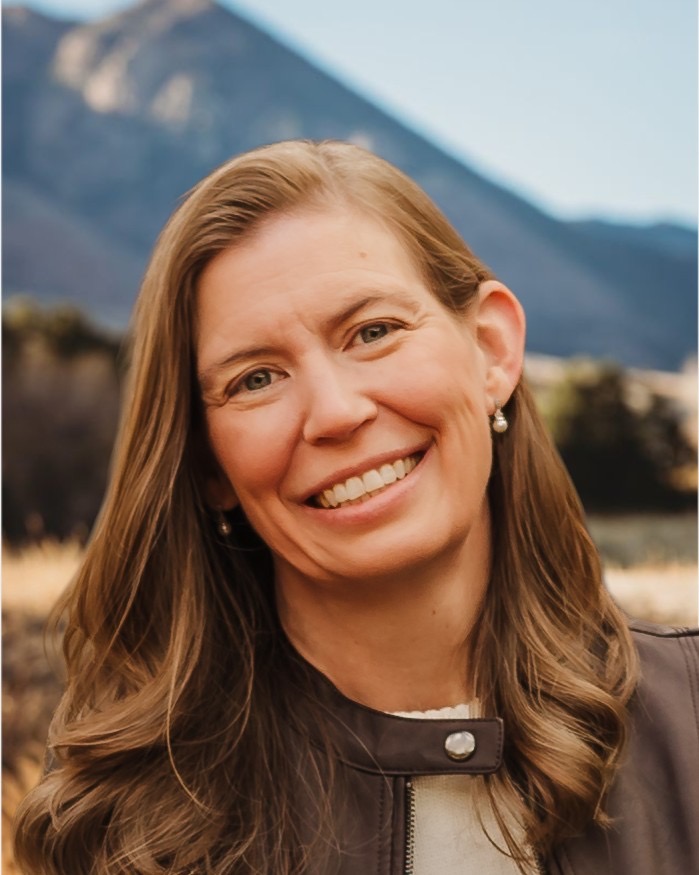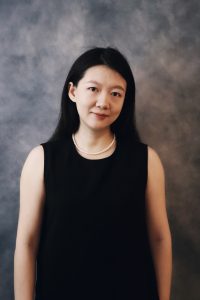
Yinshuang Xiao is one of the newest faculty members at Colorado State University’s Department of Systems Engineering. She conducts interdisciplinary research at the intersection of network science, AI, machine learning, and data-driven engineering design. We sat down with Xiao to learn more about her research, teaching philosophy, and the questions that drive her.
Your research integrates machine learning, network science, and socio-technical systems – what inspired this interdisciplinary approach?
It’s an excellent way to understand complexity. Socio-technical systems – such as infrastructure, transportation, or public health networks – are incredibly complex. They’re dynamic, often involve human behavior, and are increasingly shaped by technologies like AI. Network science offers valuable tools for modeling relationships and assessing uncertainty, like how systems respond to disruptions. It helps us describe how components interact, but it doesn’t always let us predict outcomes. Machine learning adds that predictive layer. It uncovers hidden relationships and patterns that we can use to build useful models, helping us move from mere description to informed action.
My research brings network science and machine learning together to better model, design, and improve systems. Many of my previous research projects demonstrate the value of combining network science and machine learning. For example, I’ve used machine learning and network modeling together to predict user behavior in shared mobility systems, and to measure product competitiveness in evolving markets.
Why did you choose to pursue a career in academia?
It started with my Ph.D., where I discovered how exciting it is to learn and explore questions that matter. I also had a long-term mentorship with my advisor, Dr. Zhenghui Sha at the University of Texas – Austin, who not only shaped my research but also guided my personal growth. That experience showed me the impact we can have as mentors. I knew I wanted to stay in academia – to keep learning and to support students on their own paths. 
What excites you most about joining CSU?
I love how collaborative and supportive the environment is. The online systems engineering program is especially exciting—it brings together professionals from diverse backgrounds and industries, which really enriches the learning experience. And personally, I’m looking forward to exploring all that Fort Collins has to offer outdoors!
What kinds of big questions drive your research?
My main question is, how can we design more equitable, resilient, and adaptive systems by understanding the uncertainties, hidden interactions, and dynamics within them, especially as systems become increasingly complex? Answering this question requires addressing three major challenges. How do large-scale systems evolve over time, and how can we model them? How can we understand and quantify uncertainty across interconnected systems? Finally, can we apply what we’ve learned to have useful effects?
Looking ahead, I’m excited about incorporating temporal dynamics and thinking about AI not just as a tool, but as an active component within future socio-technical systems.
How do you think engineering education needs to evolve to meet an increasingly complex world?
Compared to more traditional engineering disciplines, systems engineering is way more interdisciplinary. Take a modern manufacturing system, for example. You’re not only dealing with different manufacturing processes, but you also need to know how to handle all the data that system generates. That means bringing in knowledge from data science, and even areas like management or organizational behavior, especially when you’re trying to improve how people and processes work together.
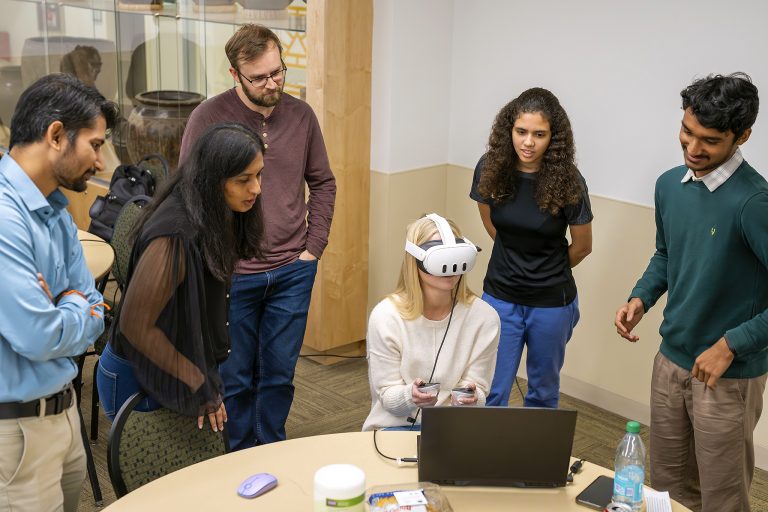
Engineering students should be able to connect ideas from statistics, data science, behavioral science, and beyond. Project-based learning is also important. It simulates the kind of collaborative work they’ll do in industry. We need to prepare students not just with technical skills, but with the ability to communicate, lead, and work across disciplines. I want to show students how to connect the dots across fields – how to bring together all these different types of knowledge to solve real-world problems. I think developing leadership and collaboration skills is just as important as the technical side.
How do you approach mentorship and help students discover their own research paths?
I aim to create a supportive environment where students feel safe asking questions and taking risks. I think that kind of environment is important for keeping students genuinely excited about research. Especially in a long journey like a Ph.D., sustained enthusiasm is what carries people through challenges and helps them grow.
I would like to meet with students regularly. I encourage ownership and help them collaborate across disciplines so they can develop into independent, confident researchers. Those meetings aren’t just about checking progress, they’re a chance for me to really understand what each student is interested in, what their strengths are, and where they want to go. That way, I can help them shape research questions that are not only personally meaningful but also grounded in real-world impact. I’ve found that this kind of continuous guidance helps students build confidence and motivation over time.
What mindset do you bring to teaching, and what do you hope students bring to the classroom?
I try to help students think independently and develop design skills that account for both technical and social factors. I want them to bring curiosity and the ability to collaborate. A solid background in statistics and systems thinking is helpful, but I’m most excited by students who are willing to explore the unknown—who aren’t just looking for the right answer but learning how to ask better questions.
Tell us about the COSINE Lab you’re launching.
The name stands for Complex Systems, Informatics, and Networked Engineering Laboratory. We focus on understanding how complex systems interact, how their functionality evolves over time, and how AI fits into human-machine systems. We want to create the next generation of system design methods that are data-driven, dynamic, and adaptive. We’re always open to collaboration!