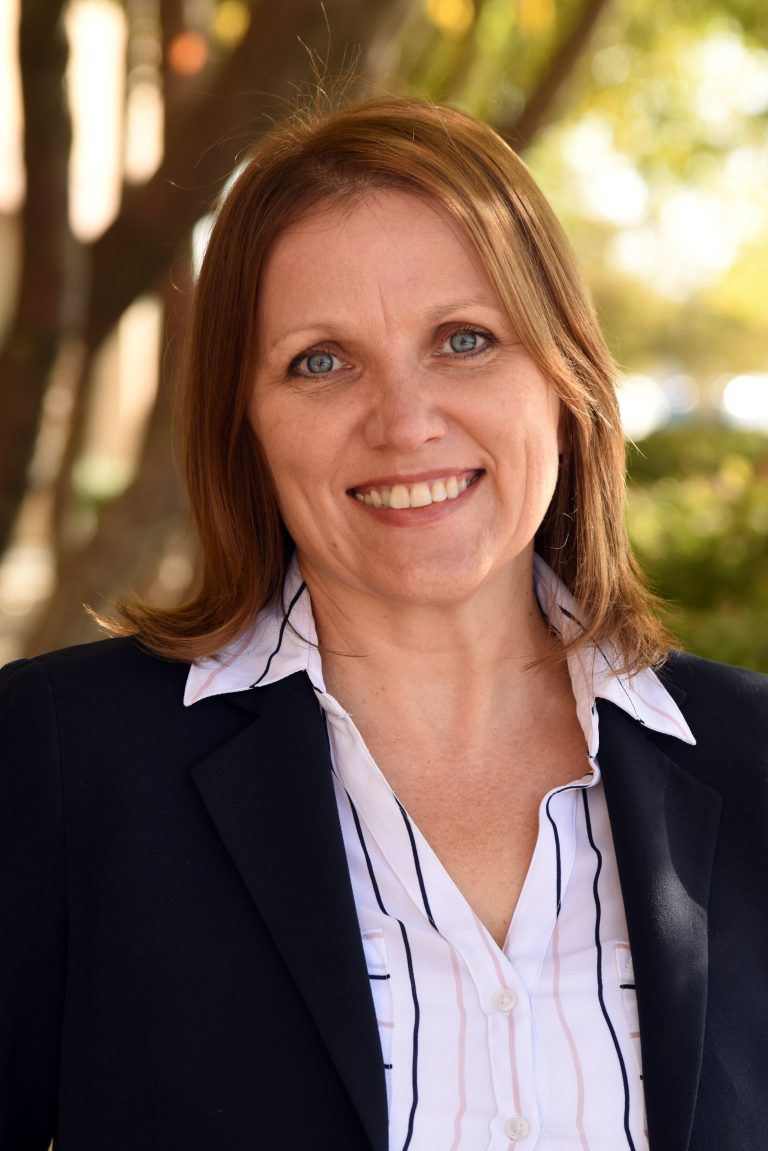
 When Sarah Shaw helped launch rockets as a young Air Force officer, she thought she’d found her dream job.
“You can’t imagine my enthusiasm,” she said. “As my sponsor drove me to my office at the launch site for the first time, I thought, ‘You’ve got to be kidding me. I’m the luckiest person in the world.’” From launching rockets, Shaw went on to design and operate satellites in future assignments.
It’s a deeply complex process to get a rocket or satellite into space, one that requires the interplay of both private and public organizations with a shared understanding of requirements, goals, and problems. That is why, when Shaw left the military, her career took a new direction. She became a development contractor working for Jacobs, managing programs to design satellites for government customers.
Shaw was assigned projects that required the use of model-based systems engineering (MBSE), a new kind of digital engineering that provides users with a systems-wide perspective on technical requirements and product functions. MBSE has become a central tool within most large-scale engineering enterprises, especially within the federal government where mission-critical contract requirements must be verifiable.
The benefits of MBSE include the increased ability to: 1. predictively model systems outcomes, 2. trace requirements, and 3. rapidly innovate from old designs with less risk. However, MBSE also requires a paradigm shift within engineering enterprises as it needs higher time commitments to input information, transparency across teams, and a focus on maintaining the digital model through the design process. These challenges often result in organizational resistance to the adoption of digital engineering.
Shaw said she initially faced steep challenges while coordinating her team’s work with industry partners.
“It was probably the most frustrating year of my professional life,” she said. “I wanted to know why that was so hard when we’ve got really bright people who want this project to succeed on both teams?”
That frustration sparked the research she’s now completing at Colorado State University. She studies not just the technology but also the humans who use it, how they use it, and how they might use it more effectively. Her dissertation presents a method for helping program managers and engineers identify what roles need which MBSE skills, creating a roadmap for workforce readiness.
“I wanted to write this for the program manager or chief engineer who is struggling to get their team up to speed – to give them something that could be actionable,” she said.
Shaw now works for The Aerospace Corporation, the leading architect for the nation’s space programs. In her role, she is an advocate for embracing MBSE despite its challenges.
“There is pain upfront, however; it pays back in spades down the line,” she said. For Shaw, MBSE isn’t just a technical upgrade – it’s a fundamental shift toward connectedness and collaboration.
“Everybody shares this one connected model, so that when there is a design change, everybody else throughout the system and life cycle of the project can see what that change is and how it will impact their work later,” she said.
With her recent defense, Shaw showed her work will not just contribute to scholarship but help real-world teams thrive.
“I hope that in the future somebody can take what I’ve started, refine it a little bit, and expand on it to meet their specific needs,” she said.
Shaw’s academic advisor, Tom Bradley, head of CSU’s Department of Systems Engineering, said her work is important to the future of engineering.
“The digital transformation is not just about new software or new computing – it’s also about new ways of organizing people and their work,” Bradley said. “Sarah’s research is exactly the kind of contribution that industry and government need to help them train and tailor the digital engineering workforce of the future.”