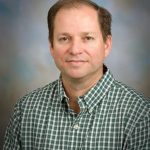
John van de Lindt published an article in The Conversation on why earthquakes can be so destructive to structures particularly in developing countries and what communities can do moving forward to build resilience.

John van de Lindt published an article in The Conversation on why earthquakes can be so destructive to structures particularly in developing countries and what communities can do moving forward to build resilience.
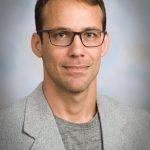
Meet Assistant Professor Antônio Alves Meira Neto
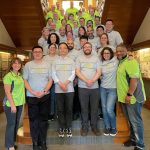
For the first time in its 24-year history, the prestigious ExCEEd Teaching Workshop from the American Society of Civil Engineers (ASCE) was held on the CSU campus in Fort Collins.

A CSU civil engineer has received a U.S. Department of Energy grant to help solar trackers – the structures that enable solar panels to follow the path of the sun – withstand high winds and wind-related natural disasters.

Assistant Professor Ryan Smith’s research connecting groundwater depletion to arsenic contamination was cited in a New York Times article entitled “America Is Using Up Its Groundwater Like There’s No Tomorrow.” Below is an excerpt from the article: “In general, as people drill deeper wells, the likelihood of arsenic contamination increases, according to Dr. Smith, now…Read more

Professor Hussam Mahmoud has published an article in Nature‘s online journal under the World View section entitled “The causes of wildfires are clear. How they burn through communities is not.” In the article, Mahmoud calls for community-wide mitigation to reduce damage from wildfires. His own groundbreaking wildfire model is one such way to increase resilience…Read more
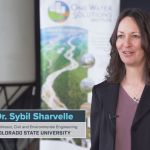
Sybil Sharvelle, Professor of Civil and Environmental Engineering, is also head of the Water Technology Acceleration Platform Lab (Water TAP) at the CSU SPUR campus. Learn more about the Water TAP Lab in this video.
This week, both NPR for Northern Colorado (KUNC) and Colorado’s 11 News (KKTV) invited Professor Hussam Mahmoud to describe his work on predicting the path of wildfires within communities. While there are several models for predicting wildfire paths in forests and wildlands, communities are more challenging to predict. Yet, his groundbreaking model was able to…Read more
NSF has awarded CSU Assistant Professor Ryan G. Smith a $328,981 grant to study how subsidence, or the sinking of land area from the removal of groundwater, affects long-term water availability in southwest Utah.

Morrison develops framework for measuring floodplain integrity across the contiguous U.S. Associate Professor Ryan Morrison details his latest research in the development of an index of floodplain integrity in an article published by Communications Earth & Environment entitled “Degradation of floodplain integrity within the contiguous United States.” Floodplains provide critical environmental benefits such as reducing the impact…Read more