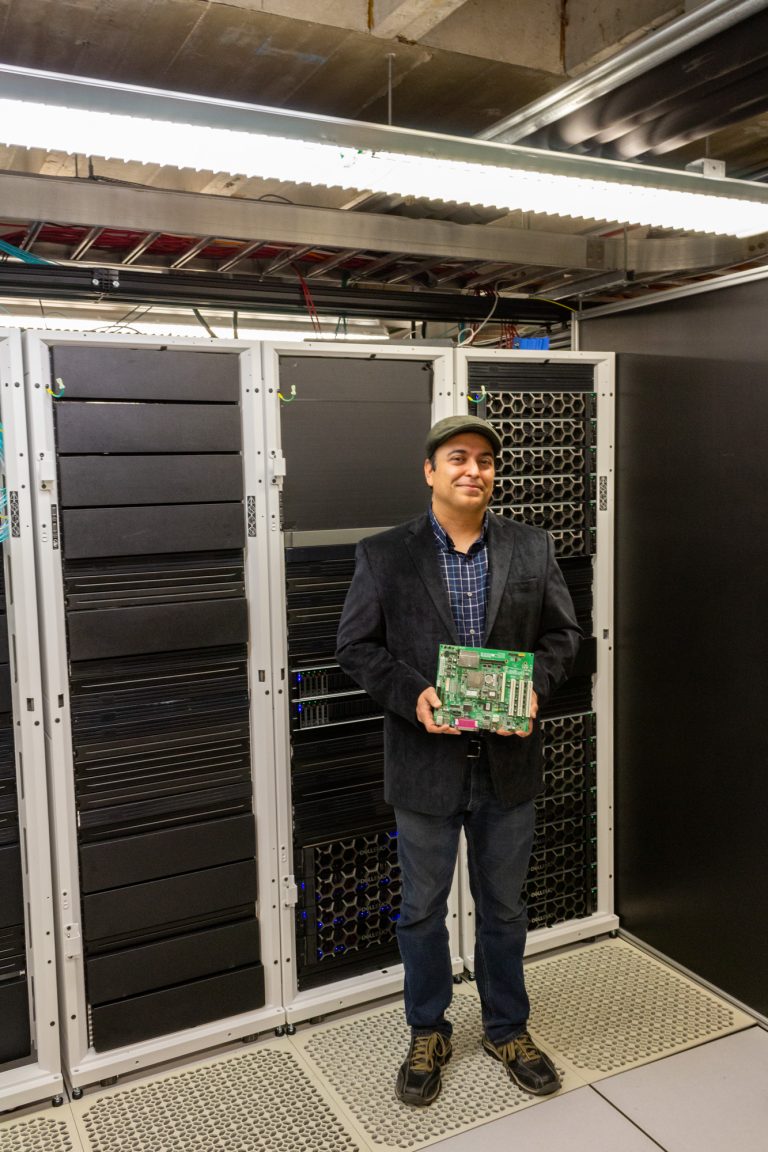
Embedded and Internet of Things (IoT) Systems Concentration

Computer Engineering

Design and optimize interconnected devices and systems

The interdisciplinary Embedded and IoT Systems Concentration takes a bird’s eye view of computer engineering to help you understand how electronic devices, software, and networks function together to enable end-to-end solutions.

Take a smart home, for example. Rather than designing one aspect of the solution, such as the temperature sensors on a thermostat, you will design and optimize software and hardware technologies across the entire spectrum to enable an integrated, smart system. 
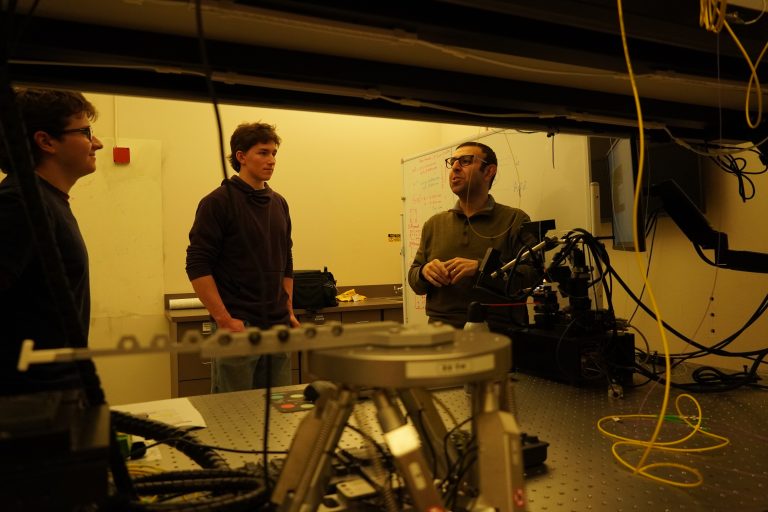
What you will learn

Centering on the science and design of both hardware and software for computing systems, you will work on complex engineering problems such as improving energy-efficiency in mobile devices, integrating artificial intelligence into computing platforms, and developing solutions for reliability and security in safety critical applications. 

The computer engineering courses equipped me with technical knowledge in breadth and trained me to be an independent and disciplined learner.

Career Outlook

Computer occupations are behind strong STEM employment growth in the 2019–29 decade. A growing digital economy, accelerated in particular by the expansion of Internet of Things (IoT), is a driving force behind this projected growth, according the Bureau of Labor Statistics Beyond the Numbers report.

Real-world examples

Smart grids, connected appliances, smart home security systems, autonomous farming equipment, wearable health monitors, optimization of renewable energy resources, environmental monitoring of wastewater, smart farming, connected healthcare systems, and more. 

Median salary of Computer Engineers in 2024

AI and ECE at CSU

10 cool things to know

Faculty in the Department of Electrical and Computer Engineering (ECE) have pioneered the use and study of AI in engineering – long before open-source AI platforms existed.