Summer and Fall 2026
New and Online Courses


We have several exciting new courses and courses that are being offered online for the first time in summer and/or fall 2026! Be sure to check out this list as you’re registering for summer and fall classes and contact the instructor or your advisor with any questions you have.
Students will learn how engineering principles and innovation have influenced warfare over the course of human history. We will consider a number of case studies and topics that will include how the Romans moved dirt to siege Masada, a mechanics analysis of the most underrated weapon of ancient warfare, an overview of early biological weapons including one that goes well with a peanut butter sandwich, how the adaptation of drones in Ukraine had roots in World War II with a guy named Charlie, and flammable pigs. We will also show how some of these topics are currently being investigated by faculty and students at CSU.
This course satisfies AUCC 3D and/or free elective credit. There is no required textbook but we will incorporate multiple classic works from both military history (Clausewitz, Machiavelli, and the great Sun Tzu) and legendary historians (Herodotus, Thucydides, Caesar, Arrian, Xenophon, Polybius, and others).
This course covers the fundamentals of fluid properties and flow, including how water moves through pipes and rivers, how fluids exert pressures on different engineered structures, and how to apply basic laws of physics to fluid volumes. Fluid Mechanics is a required undergraduate course in the CEE curriculum.
Students are introduced to the foundational principles of environmental engineering through real-world applications involving water quality, water and wastewater treatment, sewer design, air pollution control, solid waste management concepts, and environmental sustainability. The course emphasizes how engineers make decisions that balance technical performance with environmental, ethical, and societal considerations. Students engage with practical examples, problem-solving, and discussions that connect environmental systems to current and emerging engineering challenges.
Many civil, construction, and chemical engineers work on projects that involve environmental engineering design. So, add to your tool belt if you haven’t explored this side of engineering! Also, the concepts covered in this course (including engineering ethics and more) help with FE exam preparation.
This course prepares the student to apply basic soil, plant, water, and atmospheric science and engineering principles for the purpose of determining crop water needs (use) or evapotranspiration (ET) to sustain agricultural production while protecting the environment. The course covers a range of methods and instrumentation available to determine crop ET, soil water status, soil water balance, irrigation scheduling, irrigation efficiencies, and water measurements, including satellite and Unmanned Aerial Systems (UAS ) remote sensing techniques to estimate spatially distributed actual crop ET and soil salinity (mapping).
This course prepares students to work with low resource or crisis-affected communities to develop water and sanitation systems. You will learn how to collect the necessary data and develop preliminary designs of the main system components. You will also learn how to work cross-culturally and collaborate with the local community on the development of the systems.
Did you know that access to clean water and safe sanitation systems provides about the same improvement in life span as access to doctors and medicines? Learn how to make a direct and positive impact in the world.
Groundwater is our most reliable supply of clean freshwater, but is becoming increasingly scarce and polluted. In this class, students will learn about the fundamentals of groundwater flow, groundwater storage loss, and recharge, as well as some of the major threats to groundwater supply globally, with a focus on the western U.S. We will discuss modern technologies, including satellite imagery and AI, that can be used to improve groundwater resource assessment.
We will discuss how modern AI tools and satellite imagery can improve our understanding of groundwater resources. We will also cover examples of areas where groundwater depletion is causing the relocation of major global cities, health effects due to contamination, and economic loss from irrigation reduction.
Students learn to apply statistical methods to real environmental monitoring problems — air, water, and soil — with an emphasis on designing defensible data collection plans, exploratory and graphical data analysis, regression, trend analysis, and handling censored data. This course has been recently updated to integrate AI tools throughout, so students will learn not just how to do environmental statistics but how to do them in partnership with AI — using large language models to support data exploration, visualization, interpretation, and communication of results. The course complements our department’s growing AI curriculum, including CIVE 580C4 (Applying AI in Environmental Engineering Practice), and is designed for graduate students and upper-level undergraduates across engineering, atmospheric science, environmental science, and related fields.
No prerequisites! AI use is built into the course design — students learn to work critically and effectively with AI as part of their analytical toolkit. The course draws on real environmental datasets and is well suited for students interested in air quality, water resources, sustainability, or environmental health. It pairs well with our new AI-focused courses in environmental engineering for students looking to build a modern, data-literate skill set.
Pumping systems are essential for water supply, irrigation, sewage management, and industrial systems. Pumps account for over 20% of global electrical energy demand, with usage often representing 25%–90% of energy in industrial plants.
This course focuses on the Fundamentals of Pumping Systems and the basics of pumping system design. Topics covered include key hydraulic principles, system components, performance curves, essential calculations, pump selection, and system behavior. Emphasis is placed on the selection of pumping equipment to optimize performance and reduce energy costs considering life cycle cost methods, and best practices for installation,
operational controls, maintenance, and troubleshooting.
This course is great for anyone who wants to understand pumps, pump sizing, and pump station design. We will also cover pumping systems used in water and wastewater treatment plants.
This course is designed for students interested in water resources, hydrology, hydraulics, and environmental engineering. The class will explore the physical processes governing how pollutants move through natural water systems, including rivers, lakes, pipes, and coastal areas.
Understanding the fate of contaminants is critical for modern engineering. This course bridges the gap between fluid mechanics theory and practical application. You will develop the analytical and numerical skills necessary to solve complex, real-world problems such as:
Hands-on Experience: The curriculum includes three projects using lab/field data and a final project designed to build advanced technical tools for engineering practice.
Comprehensive Theory: We will cover turbulence theory, the advective-diffusion equation, and water quality modeling.

Contact your undergraduate advisor with any questions you have about your summer or fall schedule.
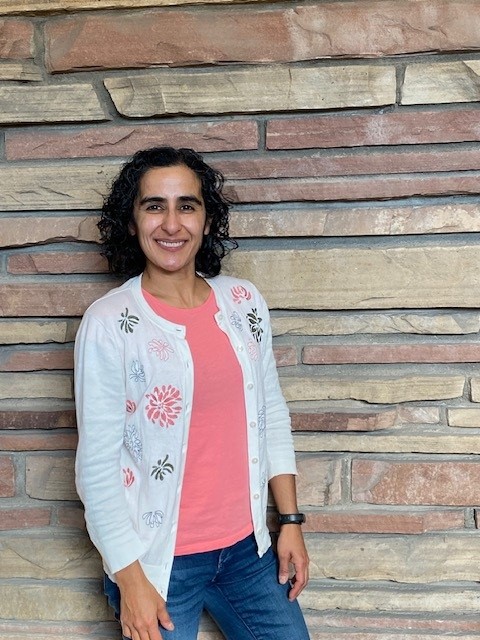
Curious how these courses could align with your graduate course requirements? Talk to Susheela or your faculty advisor!

Search the summer and fall 2026 course schedule and update your registration.