
Research being done in the EPIC lab focuses on software algorithms, hardware architectures, and hardware-software co-design for energy-efficient, fault-tolerant, real-time, and secure computing. These efforts target multi-scale computing platforms, including embedded and Internet of Things (IoT) systems, cyber-physical systems, mobile devices, and datacenters. A five minute overview video of the EPIC research lab can be found here. A concise overview of the various research activities in our lab can be found in the poster here. Selected videos from a few of these projects can be found here. Link to all relevant publications can be found here. Below on this page you will find details of various ongoing projects. Citations and publications are listed at: [Google Scholar] [DBLP].
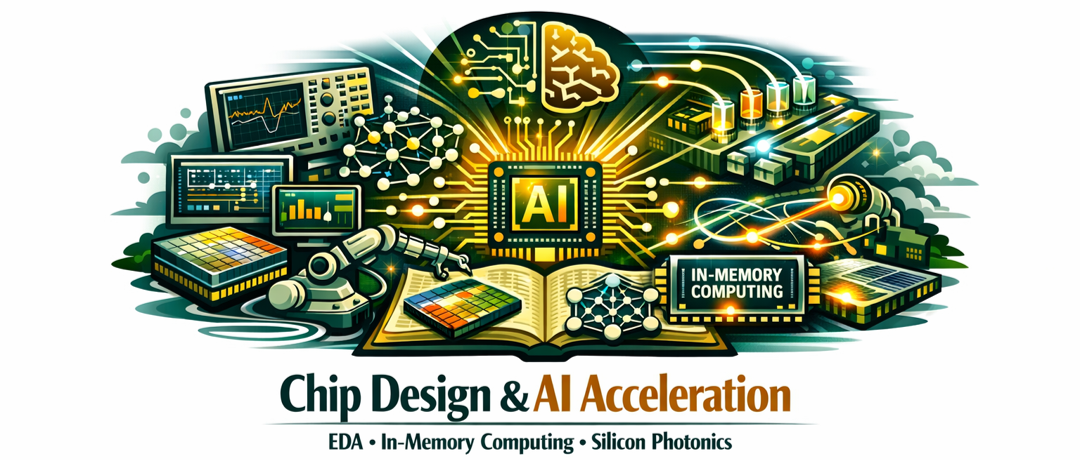
The EPIC Lab conducts cutting-edge research in Electronic Design Automation (EDA) and computer architecture, with a focus on advancing next-generation semiconductor chip design through innovative design automation methodologies and hardware architectures. The lab develops scalable design tools and architectural frameworks that enable high-performance, energy-efficient computing platforms, with particular emphasis on in-memory computing and silicon photonics to realize AI and domain-specific accelerators, . By creating novel algorithms, design flows, architectures, and hardware-software co-optimization techniques, EPIC Lab researchers aim to transcend the limitations of conventional CMOS systems and unlock faster, more intelligent, and more sustainable computing. This work bridges fundamental device- and circuit-level innovations with system-level performance demands, driving breakthroughs across machine learning, data-centric computing, and emerging heterogeneous architectures.
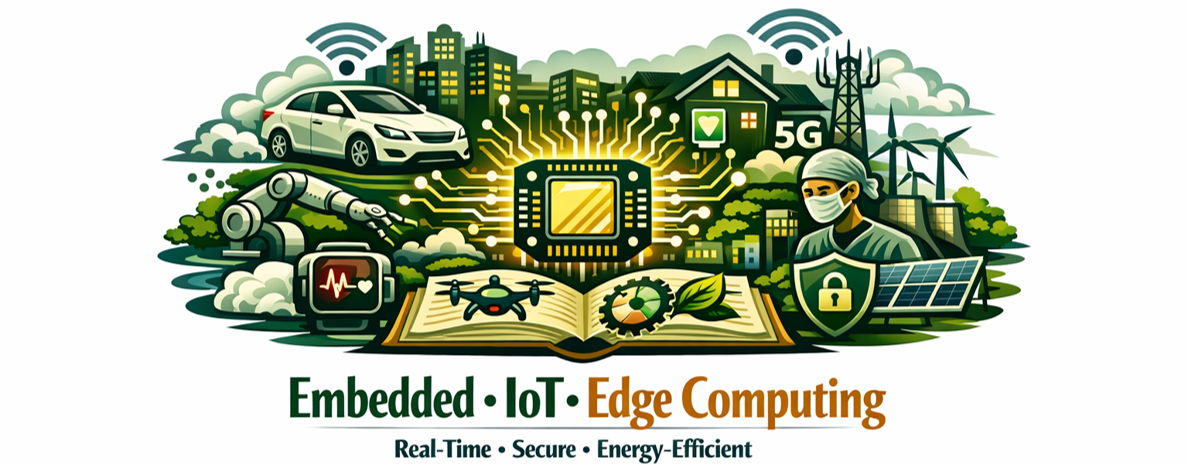
The EPIC Lab focuses on the design and optimization of embedded, IoT, and edge computing to realize intelligent, resource-efficient, and dependable cyber-physical systems capable of robust operation in real-world environments. The work centers on hardware/software co-optimized platforms tailored for automotive systems, mobile and wearable devices, indoor navigation, and time-critical sensing and control. A key emphasis is placed on achieving real-time performance, energy efficiency, and security while maintaining system reliability under practical deployment constraints. Through rapid prototyping, experimental validation, and the creation of end-to-end embedded architectures, the lab aims to advance the next generation of smart, connected systems that operate autonomously and resiliently at the network’s edge.

The EPIC Lab advances sustainable datacenter and robust high‑performance computing (HPC) research by developing intelligent, resource‑aware infrastructures that reduce environmental impact while enhancing system reliability and performance. Lab researchers design AI‑driven management techniques that optimize energy consumption, carbon footprint, and water usage across large‑scale computing platforms, all while ensuring fault‑tolerant, highly available operation. This work integrates real‑time analytics, predictive modeling, and adaptive control into datacenter and HPC resource management frameworks, enabling infrastructures that dynamically respond to workload variability and system‑level failures. Through these innovations, the EPIC Lab is shaping next‑generation computing systems that are not only faster and more efficient, but also environmentally responsible and resilient under demanding operational conditions.
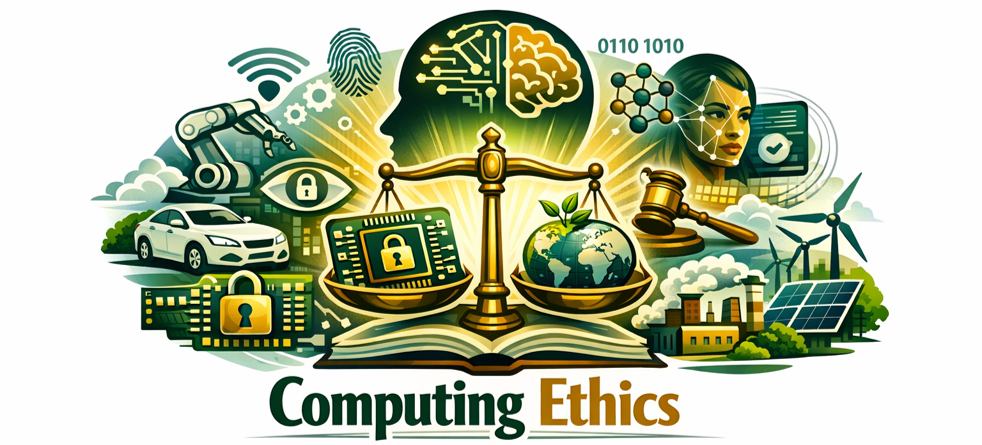
Computing systems are tightly integrated today into our professional, social, and private lives. An important consequence of this growing ubiquity of computing is that it can have significant ethical implications of which computing professionals should take account. In most real-world scenarios, it is not immediately obvious how particular technical choices during the design and use of computing systems could be viewed from an ethical perspective. The EPIC lab is interested in exploring the ethical challenges within semiconductor chip design, IoT applications, and artificial intelligence, and its impact on the design processes, tools, and hardware-software stacks of various computing systems.

Embedded and IoT systems are pervasive in our everyday lives, imparting digital intelligence to a variety of electronic platforms used in our vehicles, smart appliances, wearables, mobile devices, and computers. The need to train the next generation of embedded and IoT systems designers and engineers with relevant skills across hardware, software, and their co-design remains pressing today. The EPIC lab is interested in the pedagogical principles behind effective computing education, to train the next generation of engineers and scientists with well-rounded technical abilities and an ethical mindset.