New Perspectives on Water Quality and Surface-Groundwater Interactions along the Upper Colorado River – from a boat
The Colorado River serves over 40 million people in the southwestern US. Second to the quantity of water in the river is the quality of that water, given that the major uses are agriculture and municipal. Since 2018, our lab group has conducted annual boat-based Lagrangian water quality surveys of the upper Colorado, ranging from Pumphouse (below Kremmling and Gore Canyon) down to Lake Powell (over 300 miles). We collect high frequency (every 10 seconds) water quality data from sensors (temperature, specific conductivity, dissolved oxygen, turbidity, dissolved nitrate, pH) and samples for stable isotope analyses every ~3 miles. We are seeking to determine the fine spatial scale water quality changes between tributaries in order to determine what controls these changes (land use, non-point source discharges, etc.). In this talk we will review these results in light of data collected at USGS stream gages and annual flow dynamics.
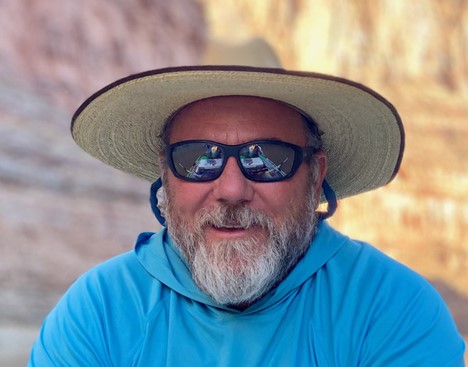
Dr. Michael Gooseff
Associate Dean for Research, College of Engineering
University of Colorado at Boulder
Professor Gooseff primarily studies hydrology and related solute transport and fate in streams and aquifers from Alaska to Antarctica. He earned a Bachelors of Civil Engineering from Georgia Tech and his MS and PhD in Civil Engineering from CU Boulder. He has been a career academic at several universities including CSU! He’s currently serving as the Associate Dean for Research for the College of Engineering at CU Boulder.