
Department of Civil & Environmental Engineering
Walter Scott, Jr. College of Engineering
Addressing the depletion of aquifers that support irrigated agriculture and provide drinking water for millions is a global challenge. Like many regional aquifers, the High Plains aquifer (HPA) in western Kansas is under stress produced by decades of intensive pumping for irrigation. The large water-level declines that have been observed across the region pose an existential threat to the viability of irrigated agriculture and the rural communities that depend on it. There is only one option to reduce that threat in the near-term: pumping reductions in conjunction with modification of agricultural practices. The key question is how much should pumping be reduced. I will describe the water balance approach that we have developed to assess the impact of pumping reductions and will demonstrate its potential using results from groundwater conservation areas in western Kansas. The transparency of the analysis and the success of field demonstrations has resulted in this approach becoming a widely accepted tool for moving towards a more promising future for the High Plains aquifer in western Kansas.
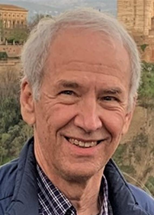
Jim Butler is a senior scientist with the Geohydrology Section of the Kansas Geological Survey, a research and service unit of the University of Kansas. He holds a B.S. in Geology from the College of William and Mary, and a M.S. and Ph.D. in Applied Hydrogeology from Stanford University. His primary research interests include assessment of aquifers that support irrigated agriculture, well responses to natural and anthropogenic stresses, high-resolution subsurface characterization, and groundwater consumption by riparian vegetation. Jim was the 2007 Darcy Distinguished Lecturer of the National Ground Water Association, the 2009 recipient of the Pioneers in Groundwater Award of the Environmental and Water Resources Institute of the American Society of Civil Engineers, and the 2020 recipient of the M. King Hubbert Award of the National Ground Water Association. He has taught continuing education workshops and short courses on four continents, and has held visiting researcher positions at Stanford University, Universitat Politècnica de València, the University of Tübingen, Sandia National Laboratory, and the Institute of Geology of the State Seismological Bureau (Beijing).