March 5
4:00 p.m.
Engineering 120

Abstract

Structure, salinity, and uncertainty: System-scale mapping with airborne electromagnetics in the lower Mississippi River Valley supports multi-disciplinary hydrologic applications

The lower Mississippi River Valley spans more than 200,000 square kilometers in parts of seven states, encompassing areas of critical groundwater supplies, natural hazards, infrastructure, and low-lying coastal regions. From 2018 – 2022, the U.S. Geological Survey acquired over 82,000 line-kilometers of airborne electromagnetic (AEM), radiometric, and magnetic data over this and neighboring regions to provide comprehensive information about subsurface geologic and hydrologic properties that support multiple scientific and societal interests, with additional data collection ongoing in 2025. Primarily acquired to improve understanding of regional groundwater systems and development of groundwater models, the AEM results have proven useful in multiple applications that also include inferences of groundwater chemistry, groundwater salinity and coastal change, identification of faults in the New Madrid seismic zone, and characterization of levee infrastructure. I will discuss the approach we took to implement this multidisciplinary and multi-stakeholder effort and showcase how the airborne geophysical data have improved understanding of groundwater resources in the region. 
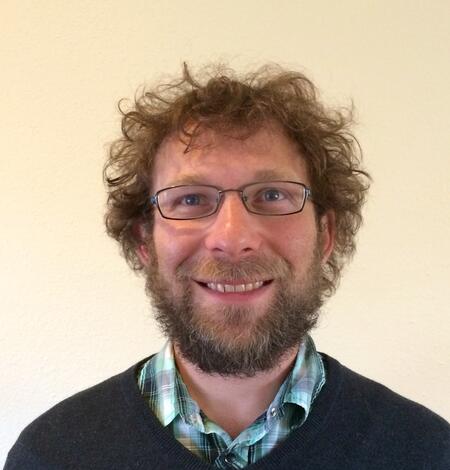
Portrait of Burke Minsley.

Biography

Dr. Burke Minsley, Research Geophysicist
Geology, Geophysics, and Geochemistry Science Center
U.S. Geological Survey

Burke Minsley joined the USGS in 2008 as a Research Geophysicist with the Geology, Geophysics, and Geochemistry Science Center in Denver, Colorado. After receiving a B.S. in Applied Physics from Purdue University in 1997, Burke began his career as a field geophysicist working on offshore seismic vessels before receiving a Ph.D. in Geophysics from MIT in 2007. His work at the USGS involves the development and implementation of innovative ground-based and airborne geophysical methods used in interdisciplinary studies to improve our understanding of Earth’s geosphere, hydrosphere, and cryosphere. Burke’s projects are interdisciplinary and geographically diverse, including permafrost mapping in Alaska, and large regional groundwater availability and salinity studies in the lower Mississippi River valley, Delaware Bay, and Illinois River Basin. He also works on development of computational methods for uncertainty quantification in geophysical datasets and development of an open community data standard for geophysical data.