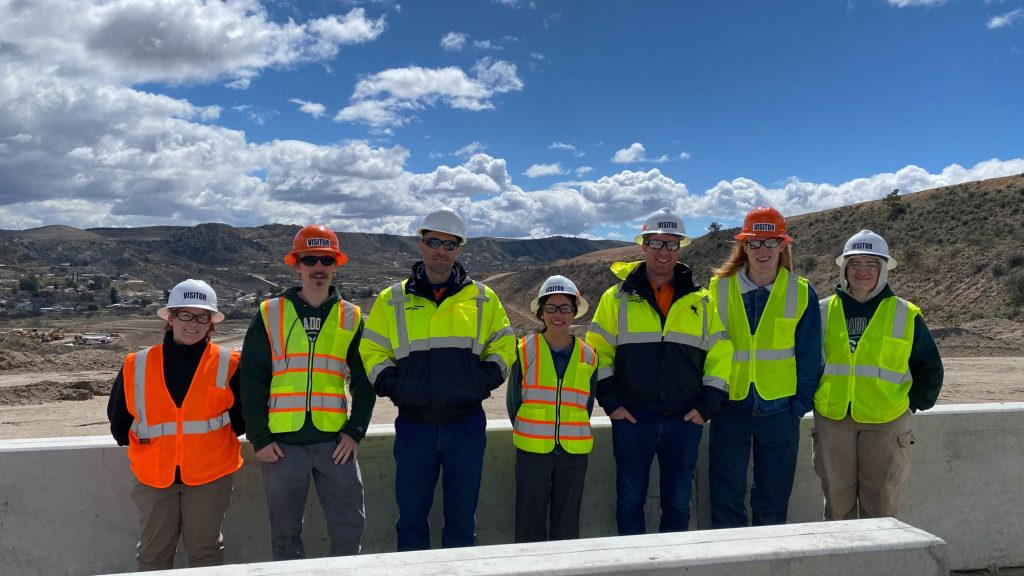
The Geoenvironmental and Geotechnical Engineering program at Colorado State University focuses on the mechanics, hydraulics, and environmental behavior of geomaterials and engineered geosystems.
Our faculty and graduate students study soil mechanics, fluid flow through porous media, and coupled hydromechanical processes to support the safe, resilient, and sustainable development of civil infrastructure. The program integrates fundamental theory with advanced laboratory testing, field investigation, and numerical modeling to address complex challenges in resource development, environmental protection, and infrastructure performance. CSU emphasizes applied and translational research, with strong collaboration and integration with industry partners to ensure real-world impact.
Geoenvironmental Engineering
CSU has a distinctive strength in geoenvironmental engineering, with particular expertise in tailings and mine waste management. Our faculty lead research and education efforts focused on the design, operation, and long-term closure of tailings storage facilities and mine waste repositories. Additional areas of focus include include waste containment systems, liners and covers, seepage and reactive transport processes, and emerging contaminants in geomaterials. Through strong partnerships with industry, government agencies, and international collaborators, CSU’s geoenvironmental research translates directly into improved design practices and long-term environmental stewardship.
Geotechnical Engineering
CSU’s Geotechnical Engineering program applies soil mechanics and fluid flow principles to the design and performance evaluation of embankments, dams, slopes, foundations, and other critical infrastructure. Faculty and graduate students investigate the mechanical behavior of geomaterials across a range of conditions, including unsaturated soils, coupled hydromechanical loading, and extreme environmental stresses. The program emphasizes advanced laboratory facilities, field-scale testing capabilities, with rigorous analytical and computational methods, Graduates are prepared to address complex geotechnical challenges in practice and research, supported by CSU’s strong partnerships with industry that foster innovation, implementation, and professional leadership.
The curriculum for the Geotechnical and Geoenvironmental graduate program is flexible to allow students a wide range of course options geotechnical engineering, geoenvironmental engineering, groundwater engineering, hydraulic engineering, hydrologic engineering, environmental engineering, and mechanics, as well as additional courses offered in supporting areas, such as the geosciences, soil science, computer science, and systems engineering.
The program is tailored to the student’s desires and needs based on their career interests. This flexibility in curriculum makes the Geotechnical and Geoenvironmental Program attractive for graduate students who value breadth or depth.