
Department of Civil & Environmental Engineering
Walter Scott, Jr. College of Engineering
The climate system is chaotic and noisy. Extracting useful information from this noise enhances the ability to make accurate weather and climate predictions. In this talk, I will discuss innovative machine learning approaches used to explore sources of predictability within the climate system that provide forecasts of opportunity – climate states that result in higher prediction skill– which ultimately lead to more confident climate forecasts on subseasonal (2 week-3 month) timescales. Neural networks are trained and tested with climate model and observational data to pinpoint sources of predictability for precipitation for 1) U.S. West Coast wintertime and 2) Midwest summertime. Tropical drivers are investigated as predictability sources for the West Coast, while North Atlantic sea surface salinity, a fairly untapped source, proves to hold predictive information for subseasonal Midwest precipitation forecasts of opportunity. Further, eXplainable Artificial Intelligence (XAI) methods are used to understand the machine learning model’s decision making strategy to not only gauge trust in our machine learning models, but to identify new sources of predictability. I will highlight ongoing research showing ways these methods can be applied to cross-disciplinary and future climate problems.
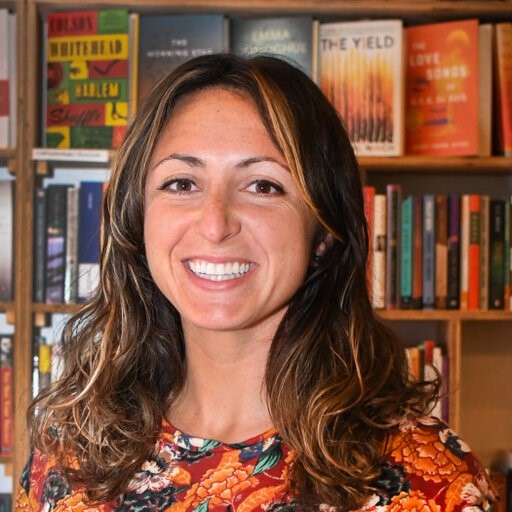
Marybeth Arcodia is a Research Scientist in the Department of Atmospheric Science at Colorado State University. Her research broadly focuses on advancing Earth system predictability via blending climate and data science techniques to understand climate variability and change. She is a member of the US CLIVAR Predictability, Predictions, and Applications Interface Panel and the Working Group on Climate Data and Predictions for Coastal Solutions. She is also involved in a number of science communication and outreach organizations to promote accessible and actionable science including the American Meteorological Society’s Board on Representation, Accessibility, Inclusion, and Diversity (BRAID) and work to engage the public on topics such as climate change, sea level rise, and hurricane preparedness. She received her PhD in Atmospheric Science from the University of Miami Rosenstiel School of Marine, Atmospheric and Earth Science.