
Peer-Reviewed Papers
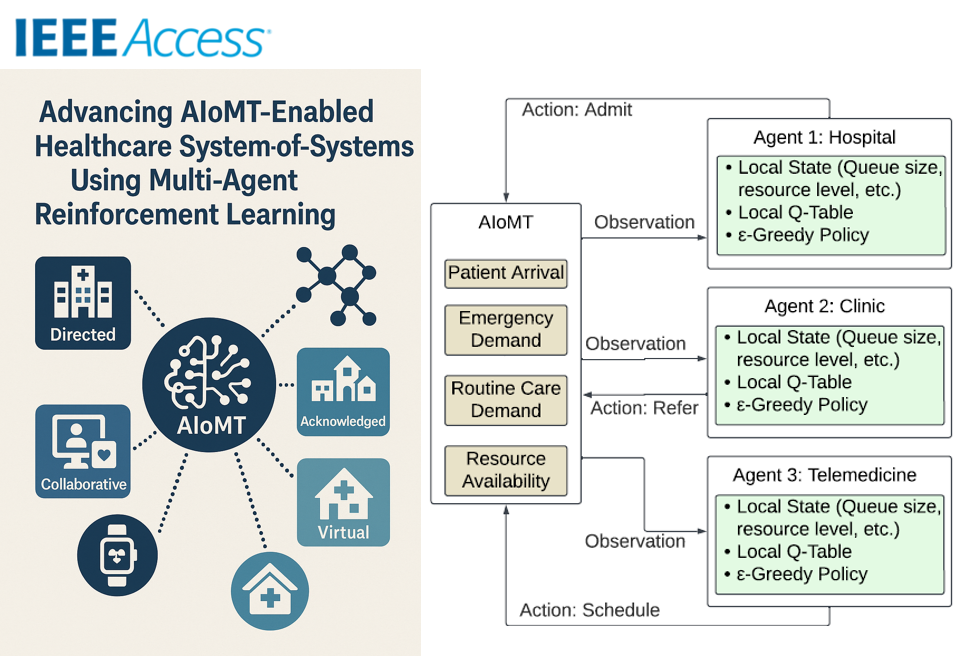
Advancing AIoMT-Enabled Healthcare System-of-Systems Using Multi-Agent Reinforcement Learning
This work presents a novel framework integrating Multi-Agent Reinforcement Learning (MARL) with System-of-Systems (SoS) principles to enhance healthcare coordination. Six heterogeneous entities—hospitals, clinics, telemedicine, wearables, rural centers, and virtual triage—are organized into four coordination models: Directed, Acknowledged, Collaborative, and Virtual. Within an AI-enabled Internet of Medical Things (AIoMT) environment, agents autonomously optimize resource allocation, cooperation, and service efficiency through decentralized learning.
A. Sheikh, and E. K. P. Chong, "A Multi-Agent Reinforcement Learning Framework for AIoMT-Enabled Healthcare SoS Coordination”, IEEE Access, vol. TBA, no. TBA, pp. 1--1, August 2025. DOI: 10.1109/ACCESS.2025.3596921
Read More >>
Unpacking the Research: Advancing AIoMT-Enabled Healthcare System-of-Systems Using Multi-Agent Reinforcement Learning
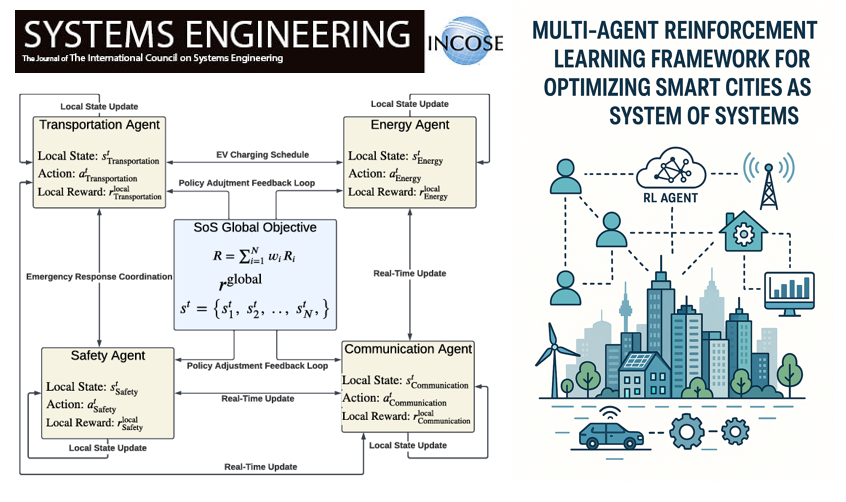
Multi-Agent Reinforcement Learning Framework for Optimizing Smart Cities as System of Systems
This research introduces an innovative framework that combines Multi-Agent Reinforcement Learning (MARL) with traditional Systems of Systems (SoS) methodologies to address existing limitations. Unlike conventional SoS approaches, the framework harnesses MARL’s decentralized decision-making and augmented reward mechanisms to dynamically align individual agent objectives with overarching SoS goals. This approach effectively tackles critical challenges such as inter-system coordination, scalability, and adaptability, offering a cohesive solution for managing complex interactions and emergent behaviors in smart city systems. The framework ensures both traceability and adaptability, enabling efficient, coordinated, and real-time responses to dynamic environmental changes.
A. Sheikh, and E. K. P. Chong, "Multi-Agent Reinforcement Learning Framework for Optimizing Smart Cities as System of Systems, Systems Engineering, Wiley, vol. TBA, no. TBA, pp. 1--1, July 2025. DOI: 10.1002/sys.70006
Read More >>
Unpacking the Research: Multi-Agent Reinforcement Learning Framework for Optimizing Smart Cities as System of Systems
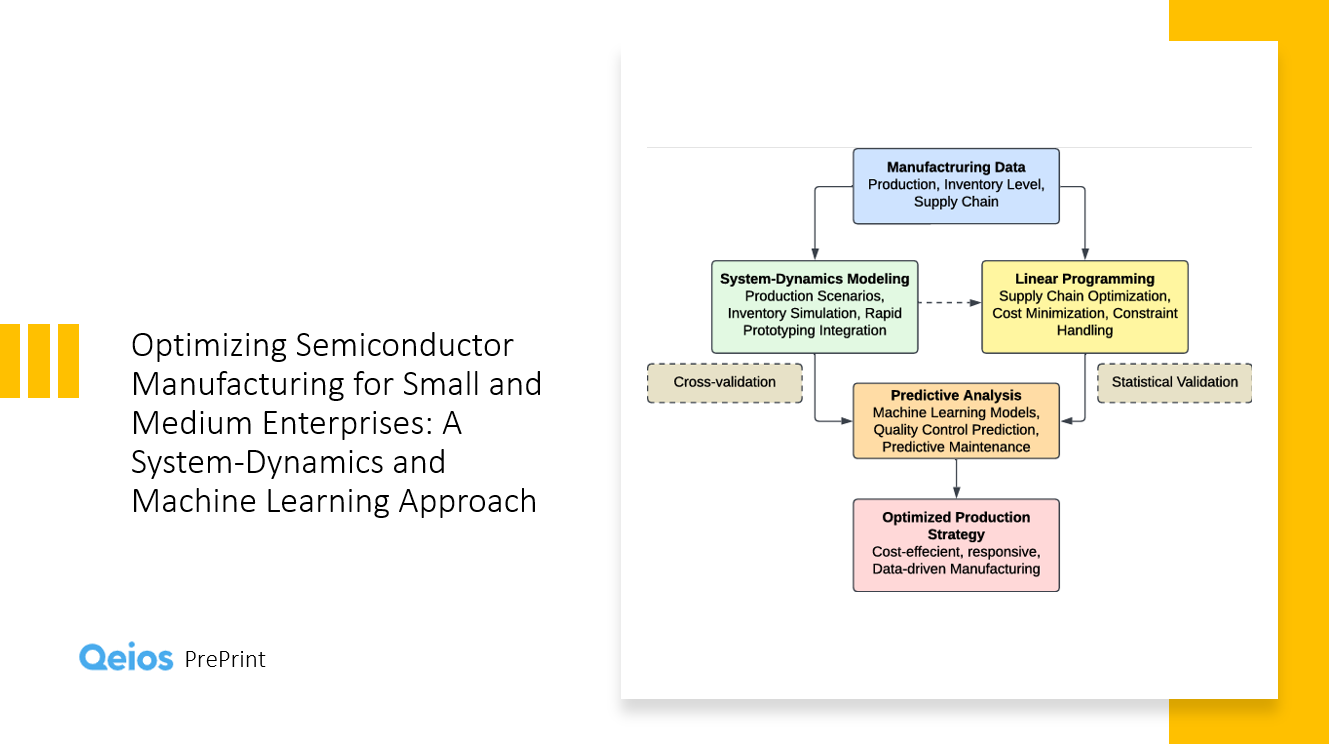
Optimizing Semiconductor Manufacturing for Small and Medium Enterprises: A System-Dynamics and Machine Learning Approach
This paper presents an integrated optimization framework for low-volume semiconductor manufacturing tailored to Small and Medium Enterprises (SMEs). Combining system-dynamics modeling, linear programming, and predictive analytics, the framework enhances supply chain efficiency and production planning. Python-based simulations and cross-validated machine learning models support cost-effective decision-making and rapid prototyping. Through correlation analysis, ANOVA, and comparative evaluation, the framework demonstrates measurable gains in both efficiency and adaptability, offering actionable strategies for addressing SME-specific constraints.
A. Sheikh, and E. K. P. Chong "Optimizing Semiconductor Manufacturing for Small and Medium Enterprises: A System-Dynamics and Machine Learning Approach," Qeios, vol. TBA, no. TBA, pp. 1--1, March 2025. DOI: 10.32388/EOQ6MJ.2
Read More >>
Unpacking the Research: AI Driven Semiconductor Manufacturing Optimization
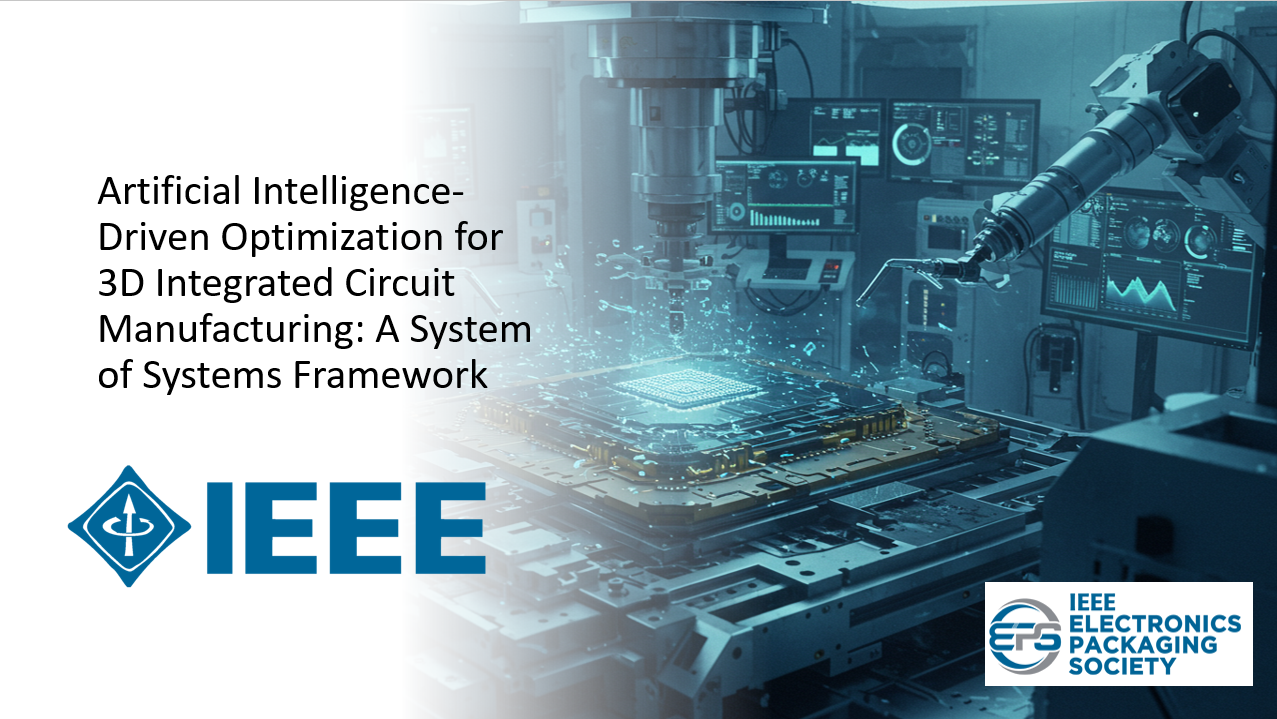
Artificial Intelligence-Driven Optimization for Three-Dimensional Integrated Circuit Manufacturing: A System of Systems Framework
This paper introduces an Artificial Intelligence (AI)-driven framework for optimizing 3D Integrated Circuit (3D-IC) manufacturing through a System of Systems (SoS) approach. Our framework integrates defect detection, process optimization, and electrical failure prediction using advanced methodologies, notably Convolutional Neural Networks (CNNs), Random Forest Classifiers, and Long Short-Term Memory (LSTM) networks.
By dynamically aligning subsystem outputs with global manufacturing objectives, our framework addresses key challenges in Through-Silicon Via (TSV) formation, defect reduction, and yield enhancement.
A. Sheikh, and E. K. P. Chong "Artificial Intelligence-Driven Optimization for 3D Integrated Circuit Manufacturing: A System of Systems Framework," IEEE Transactions on Components, Packaging and Manufacturing Technology, vol. TBA, no. TBA, pp. 1--1, March 2025. DOI: 10.1109/TCPMT.2025.3549707
Read More >>
Unpacking the Research: AI and 3D Integrated Circuit Manufacturing Optimization
Evaluating Artificial Intelligence Models for Resource Allocation in Circular Economy Digital Marketplace
This study evaluates multiple machine learning (ML) models to address the complexities of resource allocation, demand-supply matching, and dynamic pricing in volatile Circular Economy (CE) digital marketplaces. Without fine-tuning hyperparameters, we assessed the baseline performance of diverse AI algorithms, uncovering insights into their strengths and limitations for managing unpredictable market conditions.
This work establishes a foundational framework for integrating AI into CE marketplaces, showcasing its role in supporting sustainable resource efficiency and decision-making. It also emphasizes the importance of fairness, transparency, and ethical considerations for responsible AI deployment in sustainability contexts.
A. Sheikh, S. J. Simske, and E. K. P. Chong, "Evaluating Artificial Intelligence Models for Resource Allocation in Circular Economy Digital Marketplace," Sustainability, vol. 16, no. 23, paper 10601, December 2024. DOI: 10.3390/su162310601
Read More >>
Listen to the Key Takeaways: AI Model Evaluation for Circular Economy

Enhancing Defect Detection in Circuit Board Assembly Using AI and Text Analytics for Component Failure Classification
This paper investigates the application of text analytics for defect detection and characterization in electronics manufacturing of printed circuit board assembly by analyzing structured and unstructured textual data from circuit board and packaged chip testing. This research leverages text analytics to transform these descriptive narratives into structured, actionable data, thereby improving the precision and efficiency of defect identification. A Naïve Bayes model was employed for classification, and natural language processing (NLP) techniques were utilized to extract meaningful patterns from defect descriptions.
A. Sheikh, E. K. P. Chong, and S. J. Simske "Enhancing defect detection in circuit board assembly using AI and text analytics for component failure classification," IEEE Transactions on Components, Packaging and Manufacturing Technology, vol. 14, no. 10, pp. 1881--1890, October 2024. DOI: 10.1109/TCPMT.2024.3453597
Read More >>
Unpacking the Research: AI and Text Analytics for Failure Classification
Sci/Eng/Tech Articles

From Stars to Servers: How Fusion Energy Could Power the AI Revolution
The power that fuels the stars—nuclear fusion—is emerging as a compelling solution to a critical challenge of the AI era: energy.
Read More >>

Is AI the Key to Unlocking Quantum Computing?
How artificial intelligence is accelerating the rise of quantum computing, transforming it from a fragile experimental concept into a scalable, intelligent platform for next-generation problem solving.
Read More >>
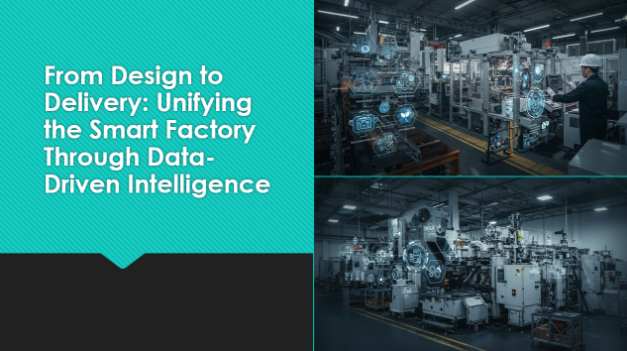
From Design to Delivery: Unifying the Smart Factory Through Data-Driven Intelligence
How data-driven intelligence can unify smart factory operations, transforming fragmented systems across design, procurement, inventory, and manufacturing into a cohesive and responsive whole.
Read More >>
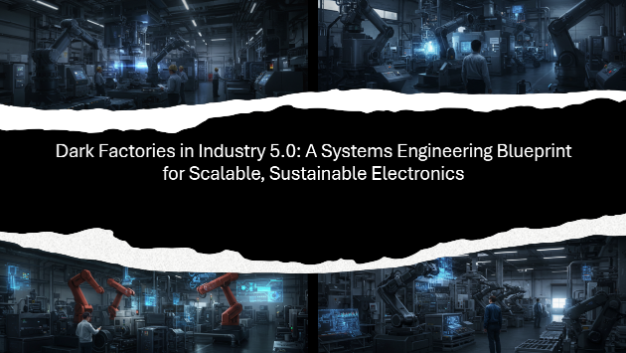
Dark Factories in Industry 5.0: A Systems Engineering Blueprint for Scalable, Sustainable Electronics
How systems engineering must evolve in response to widespread industry disruption and AI-driven automation, focusing on the deeper roles of vision, knowledge, and wisdom in resilient system design.
Read More >>
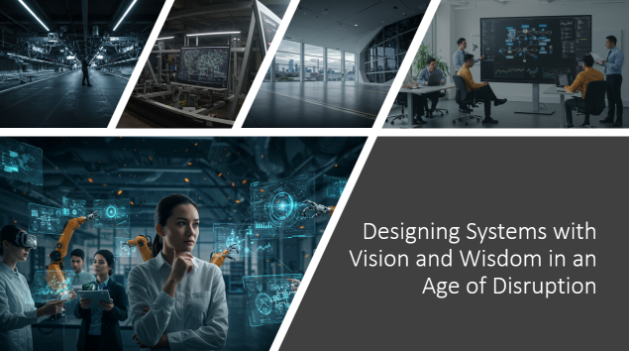
Designing Systems with Vision and Wisdom in an Age of Disruption
How systems engineering must evolve in response to widespread industry disruption and AI-driven automation, focusing on the deeper roles of vision, knowledge, and wisdom in resilient system design.
Read More >>
Quantum AI: Rethinking Intelligence in the Age of Uncertainty
The emerging field of Quantum AI and its implications for systems engineering, highlighting how the fusion of quantum computing and artificial intelligence can enable scalable, adaptive, and uncertainty-resilient decision-making.
Read More >>
Systems Engineering as a Meta-Skill Domain: Designing for Interconnected Futures
How systems engineering is evolving into a meta-skill domain—essential for navigating and designing the complex, interconnected systems shaping our future across industries.
Read More >>
The Synthetic Data Revolution: Why Waiting for Real Data Slows AI Progress
The critical role of synthetic data in accelerating AI-driven advancements, particularly in fields where real-world data is limited, unrealistic, or infeasible—such as healthcare, space exploration, and smart systems modeling.
Read More >>
Engineering the Future: Mastering AI-Powered Efficiency and Decision-Making
How AI-driven automation and smart searches are revolutionizing workflows, boosting productivity, and enhancing decision-making. Learn why secure, local AI deployment is key to maintaining data privacy while unlocking AI-powered efficiency.
Read More >>
From Websites to AI Agents: The Digital Evolution That’s Reshaping Our World
The evolution of digital transformation from websites to mobile apps, cloud computing, and AI-driven agents, highlighting how each phase reshaped business operations, user interactions, and technological capabilities.
Read More >>
Self-Supervised Learning: A New Approach to AI Representation Learning
Self-supervised learning (SSL) as an alternative to traditional supervised learning, highlighting key approaches such as contrastive learning, predictive modeling, masked prediction, and redundancy reduction.
Read More >>
The Next Frontier: How Autonomous Agents and Reasoning LLMs Are Redefining Intelligence
The transformative integration of autonomous agents and reasoning-based Large Language Models (LLMs), highlighting their combined potential to revolutionize AI-driven problem-solving across various domains.
Read More >>
The System of Record (SoR): The Backbone of Modern Systems Engineering and Cyber-Physical Systems
The critical role of the System of Record (SoR) in modern systems engineering and Cyber-Physical Systems (CPS), highlighting its importance in requirements management, traceability, real-time data integration, and security.
Read More >>
Collaborative Computing in Systems Engineering: A New Computational Paradigm
The emerging paradigm of collaborative computing in systems engineering, emphasizing real-time synergy, adaptability, and interdependence between computational processes.
Read More >>
Digital Feudalism: How AI Became the New Gatekeeper of Power
The concept of "Digital Feudalism," drawing parallels between historical feudal systems and the modern dominance of tech giants wielding AI to control vast amounts of user-generated data.
Read More >>
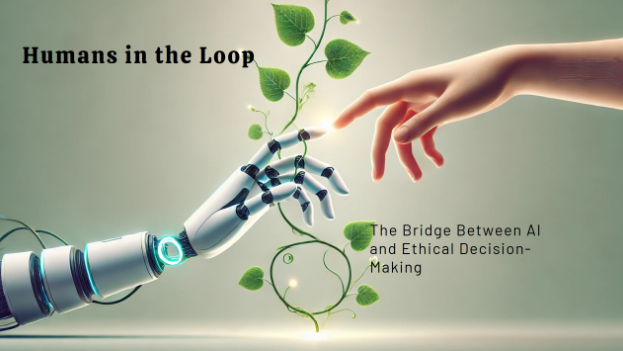
Humans in the Loop: The Bridge Between AI and Ethical Decision-Making
The concept of "Humans in the Loop" (HITL) in AI, highlighting its critical role in data labeling, model refinement, ethical oversight, and human-AI collaboration.
Read More >>

Exploring Organoid Intelligence: Bridging Biology and Computing
The emerging field of Organoid Intelligence (OI), where lab-grown brain organoids are integrated with advanced technologies to perform complex computational tasks.
Read More >>
From Statistics to Artificial Intelligence: The Evolution of Data Science and Its Growing Popularity
Discussing how foundational techniques in statistics paved the way for machine learning and, ultimately, advanced artificial intelligence (AI).
Read More >>
Next-Generation Microelectronics for CubeSats and Small Satellites: The Future of Low-Cost Space Missions
The latest advancements in microelectronics, power management, thermal control, radiation-hardening, and propulsion systems that are transforming CubeSats into powerful tools for space exploration.
Read More >>
Powering the Future: Breakthroughs in Energy Harvesting and Management for Sustainable Space Exploration
Recent advancements in energy harvesting and power management technologies, including multi-junction solar cells, solid-state batteries, and regenerative fuel cells, crucial for the future of space exploration.
Read More >>

The Evolution of Semiconductors in Space Exploration: Past, Present, and Future
The historical development, current applications, and future prospects of semiconductor technology in space exploration.
Read More >>
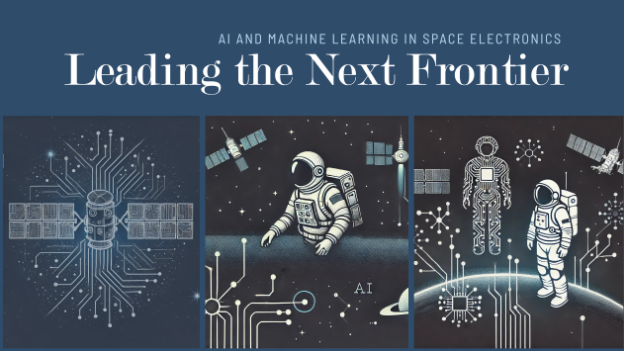
The Role of AI and Machine Learning in Space Electronics: Leading the Next Frontier
The transformative role of Artificial Intelligence (AI) and Machine Learning (ML) in space electronics, highlighting advancements in autonomous operations, predictive maintenance, data processing, and communication networks.
Read More >>

Private Space Stations: The Next Frontier in Low Earth Orbit
The emerging era of private space stations as the International Space Station (ISS) nears its retirement, highlighting key players, NASA's support, challenges, and opportunities in this new frontier.
Read More >>
Thought Leadership Articles
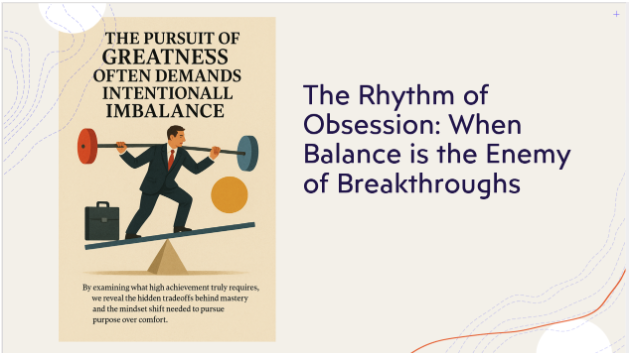
The Rhythm of Obsession: When Balance is the Enemy of Breakthroughs
How the pursuit of greatness often demands intentional imbalance — a rhythm of obsession that challenges the popular ideal of work-life balance. By examining what high achievement truly requires, we reveal the hidden tradeoffs behind mastery and the mindset shift needed to pursue purpose over comfort.
Read More >>
When Broken Becomes Normal: The Hidden Danger of Long-Term Dysfunction
How long-standing dysfunction quietly embeds itself into organizations and institutions until it becomes invisible — and unchallenged. By confronting what has been broken for too long, we uncover the hidden costs of normalized failure and the kind of leadership it takes to unlearn complacency, reignite accountability, and rebuild systems with clarity and courage.
Read More >>

Solitude, Streetlights, and the Hidden Growth in the Shadows
How quiet moments of solitude, often overlooked or misunderstood, are essential for deep personal and professional growth.
Read More >>
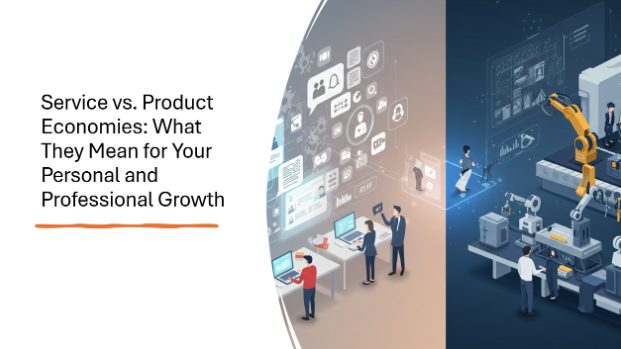
Service vs. Product Economies: What They Mean for Your Personal and Professional Growth
How the structure of an economy—whether service-based, product-driven, or hybrid—shapes the arc of personal and professional growth.
Read More >>

The Currency of Freedom: Why Time, Not Money, Is Your Greatest Asset
The true cost of money—not in dollars, but in time. As debt quietly sells off pieces of our future, and savings become the last refuge of freedom, we are called to rethink ownership—not of things, but of life itself.
Read More >>
The Work That Remains: AI, Identity, and the Future of Human Purpose
The unraveling of work as identity, exploring how AI reveals the fragility of a culture built on busyness, surveillance, and wage-bound self-worth.
Read More >>
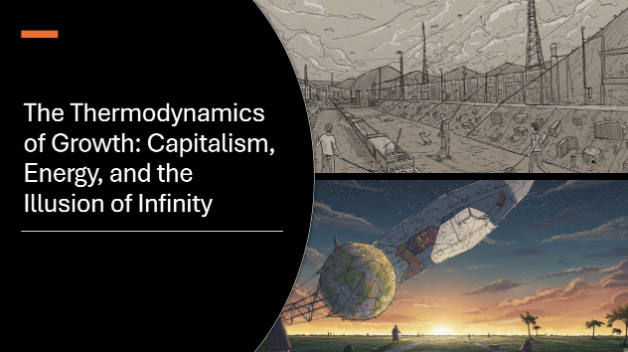
The Thermodynamics of Growth: Capitalism, Energy, and the Illusion of Infinity
The illusion of infinite growth, revealing how every act of expansion is a transformation that draws from finite systems — ecological, human, or structural. The lens of thermodynamics encourages a shift from blind accumulation toward conscious evolution, ethical design, and regenerative systems thinking.
Read More >>

Power Is Borrowed, Not Owned
The transient nature of power, uncovering how influence is not a possession but a temporary responsibility shaped by trust, context, and time.
Read More >>
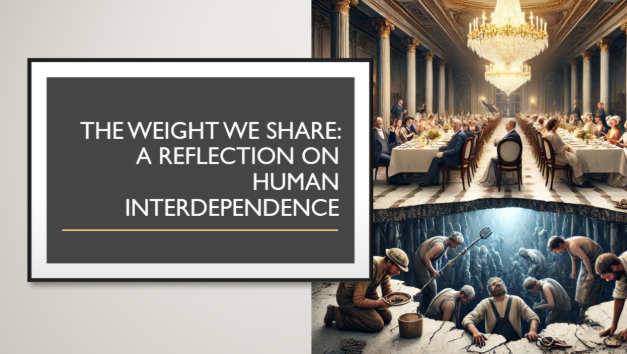
The Weight We Share: A Reflection on Human Interdependence
The unseen foundations of modern life, revealing how human interdependence—often overlooked in daily routines—quietly sustains our collective wellbeing.
Read More >>
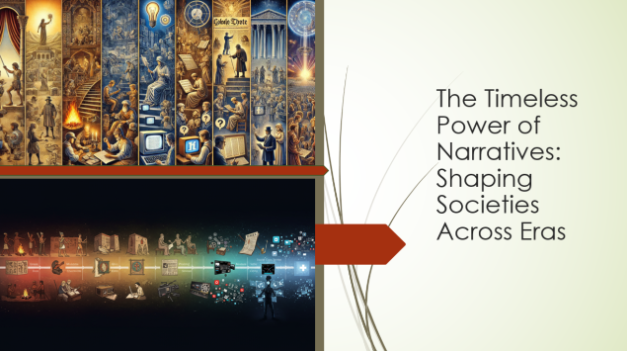
The Timeless Power of Narratives: Shaping Societies Across Eras
The evolution of storytelling as a powerful force that has shaped societies across history, from ancient myths and religious doctrines to modern mass media and digital narratives.
Read More >>
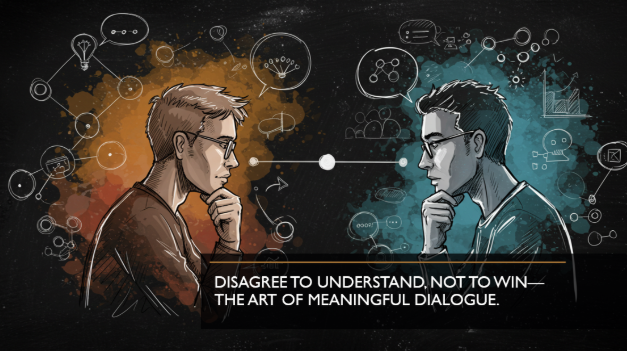
The Lost Art of Disagreeing Well: Why Constructive Conflict is Essential for Progress
The lost art of constructive conflict, emphasizing how meaningful disagreements—when approached with curiosity, respect, and a willingness to listen—can drive growth, innovation, and social progress.
Read More >>
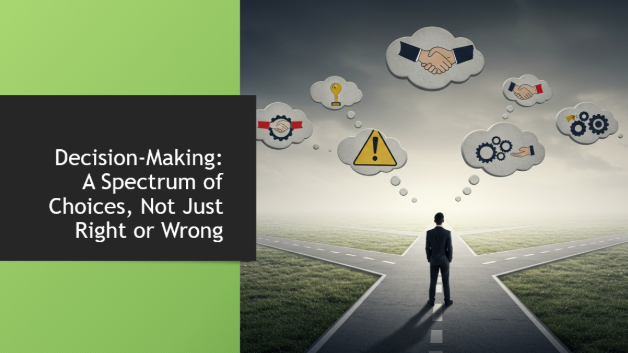
The Illusion of Right and Wrong Decisions: A Matter of Perspective and Expected Outcomes
Why decisions are neither inherently right nor wrong but instead depend on context, perspective, and expected outcomes. This article highlights the impact of cognitive biases, the importance of understanding different viewpoints, and the value of having a mitigation plan to adapt and respond effectively when outcomes do not go as expected.
Read More >>
The Future of HR in the Age of the Digital Workforce: A New Paradigm
The evolution of workforce management in the age of hybrid workforces, where humans and digital workers collaborate to drive efficiency and innovation.
Read More >>

Escaping the Algorithm Trap: Reclaiming Truth in the Digital Age
Highlighting how algorithmic content curation isolates individuals within personalized echo chambers and actionable steps to break free.
Read More >>

The Pragmatic Dilemma: Does Truth Still Matter?
The growing tendency to view truth as a tool for convenience rather than a fundamental principle, highlighting the societal and ethical consequences of devaluing honesty.
Read More >>

Understanding the Spheres of Impact on Personal Thought Management
The concept of managing personal thoughts by categorizing life’s influences into three spheres: Personal Influence, Extended Influence, and External Concerns.
Read More >>

Understanding the Spheres of Impact on Personal Thought Management
How the quantum concepts of superposition and entanglement can inspire personal and professional growth, encouraging readers to embrace multiple possibilities and build meaningful, enduring connections?
Read More >>
Productivity vs. Innovation: Are They Competing Forces or Complementary Assets?
The relationship between productivity and innovation, highlighting how they can coexist and complement each other in the workplace.
Read More >>
Leveraging Tribal and Institutional Knowledge through Effective Networking for Professional Success
Leveraging both tribal and institutional knowledge through effective networking to boost professional success by enabling faster adaptation and better problem-solving.
Read More >>

The Dunning-Kruger Effect: How Overconfidence and Incompetence Intersect in the Workplace
A cognitive bias where individuals with limited expertise overestimate their abilities while more knowledgeable professionals underestimate theirs.
Read More >>
Mastering Time Management with the Eisenhower Matrix
Exploring how to effectively manage time using the Eisenhower Matrix by categorizing tasks based on their urgency and significance.
Read More >>
White Papers
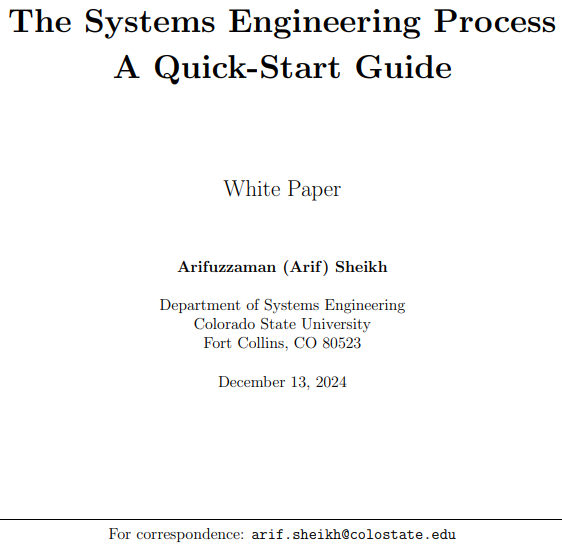
Quick-Start Guide: Systems Engineering
This white paper outlines a comprehensive framework for the foundational systems engineering process, starting from identifying needs to implementing robust system specifications. It offers practical tools and insights for managing complexity, ensuring traceability, and enhancing stakeholder satisfaction. Designed for academia and industry, this guide simplifies systems development and delivers impactful project outcomes.
Free Download (PDF) >>
Listen to Audio Highlights of Systems Engineering Quick-Start Guide
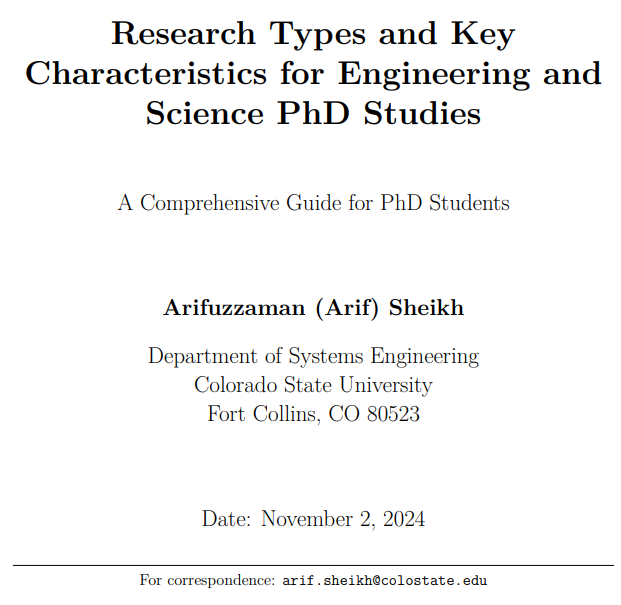
Research Guide: Engineering & Science
This white paper provides a thorough guide for graduate students, especially those in engineering and science, to understand research philosophies, methodologies, and strategies. It delivers decision-making frameworks and actionable insights to support rigorous scholarly work. By following this guide, readers will build a strong foundation in research methods and elevate their contributions to academic and professional fields.
Free Download (PDF) >>
Listen to Audio Highlights of Research Types and Key Characteristics
How-To Guides

Run Your Personal (Open Source) Large Language Model (LLM) Locally
This tutorial provides a comprehensive guide to optimizing AI chatbot settings for those running models on a local personal computer using open-source and free applications, making it especially useful for research and experimentation. It includes an installation guide to help you set up the necessary tools and fine-tune AI parameters for factual accuracy, creative storytelling, or technical precision, ensuring you can run models efficiently without relying on cloud-based services. Additionally, it serves as a starting point for fine-tuning models or conducting knowledge-based Retrieval-Augmented Generation (RAG) research, enabling researchers to build customized AI solutions with domain-specific knowledge.
Read More >>

Set Up and Host Your Personal Webpage at CSU
This guide is a knowledge-sharing initiative to help fellow graduate students and faculty at Colorado State University build and host personal webpages. These steps are based on my experience and are provided as-is. For technical issues, please reach out to Engineering Technology Services (ETS).
Read More >>