Tell me about the lab in general to create excitement.
Welcome to the Nulla consequat massa quis enim. Donec pede justo, fringilla vel, aliquet nec, vulputate eget, arcu. In enim justo, rhoncus ut, imperdiet a, venenatis vitae, justo.
Nulla consequat massa quis enim. Donec pede justo, fringilla vel, aliquet nec, vulputate eget, arcu. In enim justo, rhoncus ut, imperdiet a, venenatis vitae, justo.
Nulla consequat massa quis enim. Donec pede justo, fringilla vel, aliquet nec, vulputate eget, arcu. In enim justo, rhoncus ut, imperdiet a, venenatis vitae, justo.
Our Research
Lorem ipsum dolor sit amet
Tell about the research in general terms. Should be understood by general audience, not just peers. Add picture.
Nulla consequat massa quis enim. Donec pede justo, fringilla vel, aliquet nec, vulputate eget, arcu. In enim justo, rhoncus ut, imperdiet a, venenatis vitae, justo.
Nulla consequat massa quis enim. Donec pede justo, fringilla vel, aliquet nec, vulputate eget, arcu. In enim justo, rhoncus ut, imperdiet a, venenatis vitae, justo.
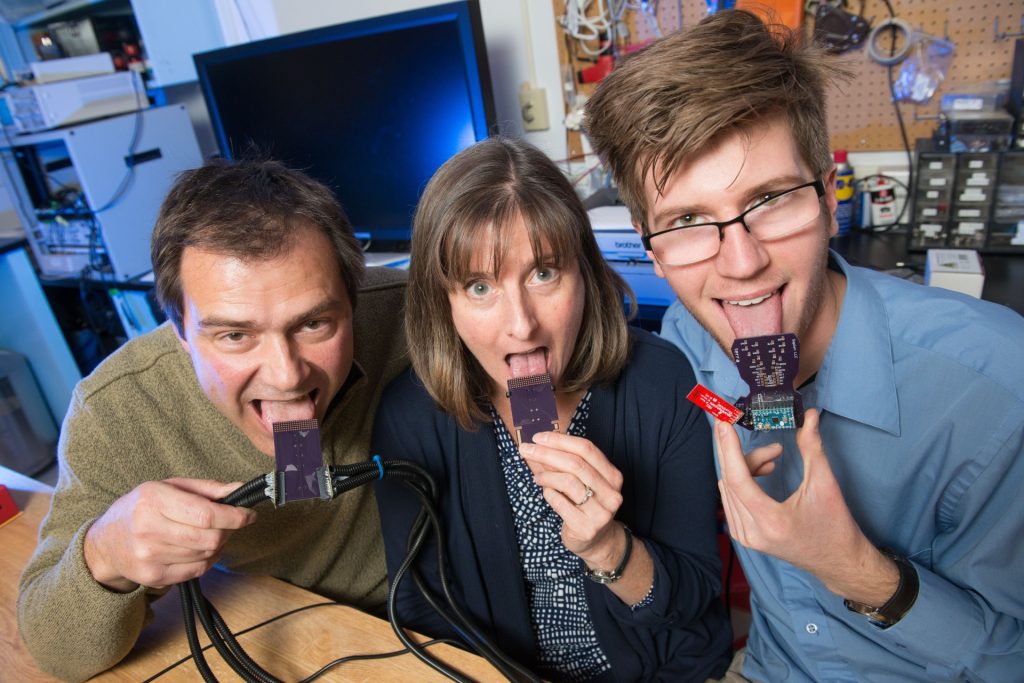
Graduate student JJ Moritz and Professors John Williams and Leslie Stone-Roy have been featured on CSU's SOURCE for their work on a sensory substitution device that converts sound to electrical impulses detected by the tongue.
Graduate student JJ Moritz and Professors John Williams and Leslie Stone-Roy have been featured on CSU’s SOURCE for their work on a sensory substitution device that converts sound to electrical impulses detected by the tongue.
In 2011, John Williams received the university-wide Jack E. Cermak Outstanding Advisor Award that honors excellence in academic advising, including recognition by students and peers as an outstanding advisor; capacity to offer career as well as academic advising.
Nulla consequat massa quis enim. Donec pede justo, fringilla vel, aliquet nec, vulputate eget, arcu. In enim justo, rhoncus ut, imperdiet a, venenatis vitae, justo.
Nulla consequat massa quis enim. Donec pede justo, fringilla vel, aliquet nec, vulputate eget, arcu. In enim justo, rhoncus ut, imperdiet a, venenatis vitae, justo.
Nulla consequat massa quis enim. Donec pede justo, fringilla vel, aliquet nec, vulputate eget, arcu. In enim justo, rhoncus ut, imperdiet a, venenatis vitae, justo.
Ion Propulsion Research at CSU:
A Legacy of Innovation
This needs to be updated to include more recent history.
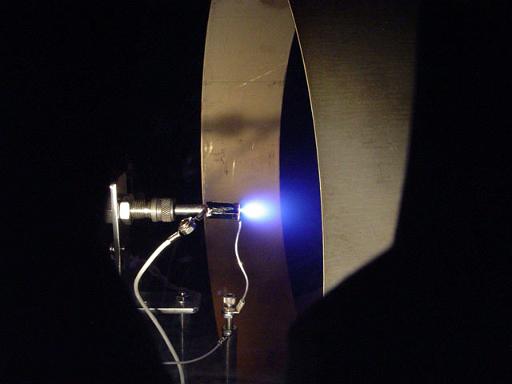
Ion propulsion research at CSU began in the mid-1960s when scientists Bill Michelson and Lionel Baldwin brought their NASA Glenn expertise to campus. With Virgil Sandborn, they built a large vacuum chamber to study ion thrusters and ion beam neutralization. A breakthrough came when they inserted a thoriated tungsten wire into the ion source, solving space-charge issues by releasing electrons more effectively.
In 1968, Dr. Paul J. Wilbur joined CSU and eventually led the Ion Propulsion Research Facility and Plasma Engineering Research Lab. Over the next four decades, the lab became internationally recognized for its work on broad beam ion sources for space and terrestrial applications.
Dr. John Williams, a former student of Dr. Wilbur, returned in 2002 to continue the legacy. He expanded the lab with new vacuum chambers and research spaces, focusing on erosion modeling of ion thruster components and plasma-material interactions. In 2004, he added the Advanced Sputtering Facility to study how spacecraft materials respond to low-energy xenon ions.
Beyond propulsion, CSU researchers explored ion-beam surface treatments to improve wear resistance and reduce friction in mechanical components. Facilities support testing in various environments, including atomic oxygen atmospheres simulating space.
The lab also investigates hollow cathode plasma contactors, essential for electrodynamic tethers and spacecraft charge control. These devices help convert orbital energy to electricity and prevent electrical interference in space missions.
Today, CSU remains a leader in electric propulsion, blending deep expertise with cutting-edge research.
Real World Impact
Talk about the impact your lab/research has on the world.
Nulla consequat massa quis enim. Donec pede justo, fringilla vel, aliquet nec, vulputate eget, arcu. In enim justo, rhoncus ut, imperdiet a, venenatis vitae, justo.
Lorem Ipsum
Nulla consequat massa quis enim. Donec pede justo, fringilla vel, aliquet nec, vulputate eget, arcu. In enim justo, rhoncus ut, imperdiet a, venenatis vitae, justo.
If closed captioning is not automatically added, update the transcript toggle.
Nulla consequat massa quis enim. Donec pede justo, fringilla vel, aliquet nec, vulputate eget, arcu. In enim justo, rhoncus ut, imperdiet a, venenatis vitae, justo.
If closed captioning is not automatically added, update the transcript toggle.
Nulla consequat massa quis enim. Donec pede justo, fringilla vel, aliquet nec, vulputate eget, arcu. In enim justo, rhoncus ut, imperdiet a, venenatis vitae, justo.
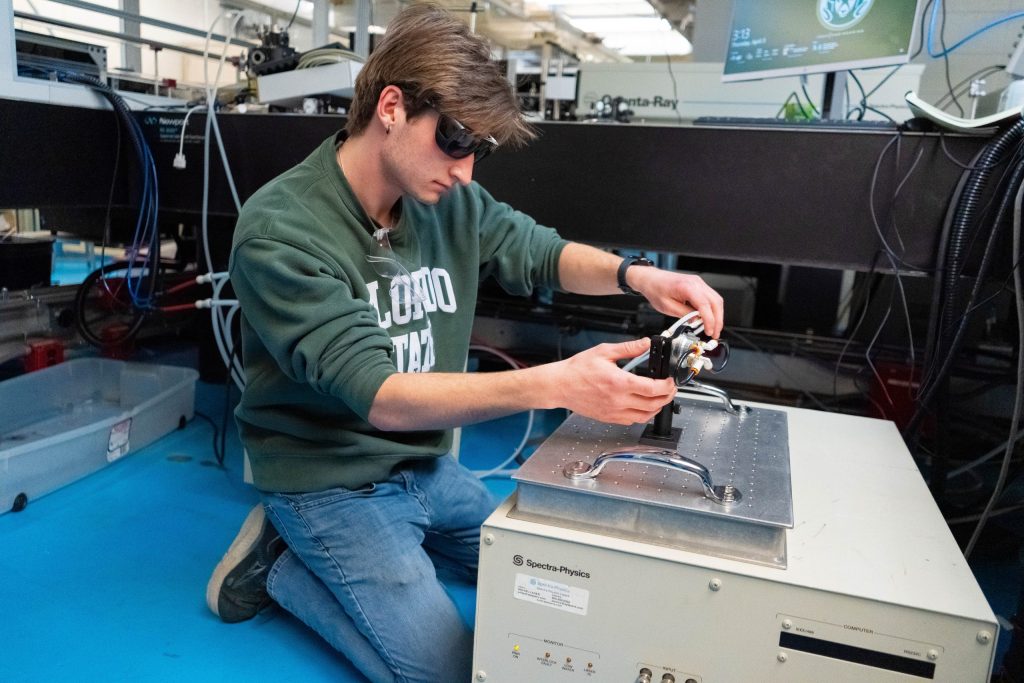
Welcome to the Electric Propulsion & Plasma Engineering (CEPPE) Laboratory at Colorado State University. The lab is directed by Professor of Mechanical Engineering John Williams. It is located at the Engineering Research Center in Fort Collins, Colorado.
The lab has been providing research, development, and testing since 1965.