Undergraduate Programs

Senior Design Program

Working throughout their final year, each senior design project covers a wealth of fascinating engineering and science research. 

Engineering Days (E-Days) is a long-standing CSU tradition that allows senior undergraduate students the opportunity to showcase their senior design projects and senior practicum research. 

Celebrate our

Senior design projects
at E-Days!

April 23, 2026
Lory Student Center and Plaza

E-Days is an exciting event for Colorado State University engineering seniors. It is a day they get to present to the world everything they have learned through their undergraduate journey and how they applied it to solve local and global problems. 

2022 Projects

Projects from other years: 2021 | 2022 | 2023 | 2024 | 2025 | 2026

Chemical and Biological EngineeringSchool of Biomedical EngineeringSchool of Biomedical and Chemical Engineering
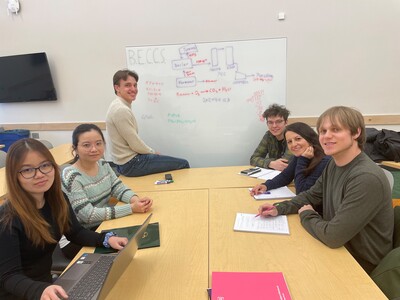
Team photo

3D Superresolution Assisted by Machine Learning

Students:

Jack Burford, Macklin Harrington, Michelle Hefner
Superresolution microscopy has been developed to surpass the resolution limit intrinsic to traditional microscopy. In this project we will use stochastically optical reconstruction microscopy (STORM), which achieves super-resolution by detecting a small random subset of molecules at any given imaging frame. By collecting many frames, a high-resolution image is reconstructed from all the fluorophore localizations. The main goal of the project is to obtain two-color, three-dimensional structures of spermatid cells. We will implement three-dimensional localization with a axial large range by engineering the image of an individual fluorophore so that it looks different depending on the fluorophore axial localization. Machine learning codes for particle localization will be tested and their performance will be evaluated. We foresee that using machine learning, it will be possible to obtain superresolution images of whole spermatid cells, which has never been achieved so far.
Department:
School of Biomedical Engineering
Video presentation:
Link to project video
Advisors:
Diego Krapt
Team photo

Algae in Space

Project ID: 1

Students:

Shehab Elhaddad, Wyatt Hughes, Jacob Julius, Brandon Martenson, Randy Mondragon, Richard Nash
The Algae in Space project investigates the feasibility of using algae as the primary life support system for a Martian base. The primary goal of the system is to grow algae in a photosynthetic bioreactor, which will convert the excess carbon dioxide, within the living space, to oxygen through photosynthesis. This will create a constant oxygen supply for the astronauts to breathe. The secondary goal is to send the algae through downstream processing so that the algae can be captured, dried, and eaten by the astronauts as a nutritional supplement.
Department:
Department of Chemical and Biological Engineering
Video presentation:
Link to project video
Advisors:
Dr. Brian Munsky
Team photo

Algal Oil for Fuels: Closed Photobioreactor

Project ID: 2

Students:

Alex Baten, Jayden Bishop, Amber Koch, Jonathan Meyer, Lauren Robertson
The objective of the Algal Oil for Fuels: Closed Photobioreactor project include developing an economically and feasibly implementable closed algal photobioreactor and improving pre-existing models in addition to adding steps for cell lysis for lipid recovery.
Department:
Department of Chemical and Biological Engineering
Video presentation:
Link to project video
Advisors:
Dr. John Sheehan
Team photo

Algal Oil for Fuels: Open Pond

Project ID: 3

Students:

Daniel Hidalgo Argote, Zoe Holderied, Colin Jones, Monica Marquez, Logan Ream, Luis Roman, Mason Vess
The Algal Oil for Fuels: Open Pond project objectives are to create and improve a sustainable and efficient open pond system to produce algal biofuels. This team will accomplish this goal by designing a process with an environment that drives the production of lipids and decreases the production of carbohydrates and proteins. The intent of this project is to ultimately be used to create affordable and renewable fuel.
Department:
Department of Chemical and Biological Engineering
Video presentation:
Link to project video
Advisors:
Dr. John Sheehan
Team photo

An Autonomous Drone for the Detection of Harmful Algal Blooms

Project ID: 4

Students:

Kate Boyd, Rachel Harvey, Fritz Ogden, Hannah Park, Adrien Schissler
Harmful Algal Blooms occur when algae overproduce and start to secrete toxins that can be harmful to human and animal health. The purpose of this project is to create an autonomous method of detecting these HABs via a surface-water drone equipped with continuous sensing and in-situ toxin detection equipment.
Department:
Department of Chemical and Biological Engineering
Video presentation:
Link to project video
Advisors:
Dr. Brad Reisfeld and Dr. Steve Simske
Team photo

Augmented Reality Ultrasound with Echogenic Needle

Students:

Ethan Barron, Servando Calderon, Kim King
Create a software solution to display ultrasound images as a volume as well as an echogenic needle capable of being viewed with ultrasound. Together, the volumized ultrasound data and echogenic needle will be viewed with augmented reality for clinical ultrasound use. Understanding real time patient specific anatomy is critical for many clinical procedures including nerve blocks. When placing a nerve block, a clinician must find the nerve/s of interest and place a needle with anesthetic as close to the nerve as possible without hitting it. This is a difficult process. The clinician must interpret where the ultrasound plane is and where the needle is. Volumization of ultrasound data provides a more complete and intuitive visualization of relevant anatomy. An echogenic needle would allow better real time visualization for the clinician to guide the needle in the body. The combination of ultrasound volumization, echogenic needle, and augmented reality will create a more efficient method of placing anesthetic for nerve blocks. The end-product of this project would be software code rendering the output video from a conventional clinical ultrasound machine as a volume to be displayed with a Microsoft Hololens2 or similar augmented reality device, in the correct orientation and/or position to the real-world patient. Additionally, an echogenic needle to be reliably viewed with ultrasound. Key problems to be solved: Deliver the ultrasound images to a Unity app or intermediate script Determine how to accurately volumize ultrasound planes Create an echogenic needle. Using Unity, render the volumized data to a head mounted display. Using Unity, render the echogenic needle within the volumized data Options for further work could include real-time accurate scaling to the patient, which may enable the device to be more usable for difficult, ultrasound-guided, invasive procedures like local anesthetic injections, or placing central venous and arterial lines.
Department:
School of Biomedical Engineering
Video presentation:
Link to project video
Advisors:
Tod Clapp, Stu Tobet, Steven Hsu, Chad Eitel, Brendan Garbe
Team photo

Automoated Cell Expansion System

Students:

Will Kumpf, Alycia Pisano, Ali Rochette, Tyler Ross
The Quantum Cell Expansion System is an automated cell culture platform that can help simplify the open, labor-intensive manual tasks associated with flask-based culture. The current Quantum system contains a single-use hollow fiber bioreactor for its cell expansion processes. In order to support the optimization of the cell expansion process, the team is looking for a Computation Fluid Dynamics (CFD) model of the hollow fiber bioreactor. This model could help with optimizing cell seeding and distribution, optimization of process parameters for difference cell types, and improve efficiency of cell harvesting. Additionally, this model could be used to aid in the scalability of the Quantum system from pilot systems all the way to large scale manufacturing. A second piece of this project would be to design a larger scale bioreactor. The current Quantum bioreactor has 2.1m^2 of available surface area for cell expansions. The Terumo team is interested in scaling this to 10m^2 and applying the CFD model to this bioreactor to optimize the design and performance of the large bioreactor.
Department:
School of Biomedical Engineering
Video presentation:
Link to project video
Sponsors:
Terumo BCT
Advisors:
Team photo

Bioenergy with Carbon Capture and Sequestration (BECCS) at Sugarcane Ethanol Facility

Project ID: 5

Students:

Andrew Doctor, Kenneth Fagan, Owen Haley, Phuong Huynh, Marinela Kirk, Cuc Nguyen
The purpose of this project is to design a post-combustion carbon capture technology with the intent to capture the carbon dioxide release during the production of ethanol through fermentation of the sugarcane. The project will focus on the design of the boiler used for burning the bagasse (sugar cane waste).
Department:
Department of Chemical and Biological Engineering
Video presentation:
Link to project video
Advisors:
Dr. John Sheehan
Team photo

Bioreactor for Upscale of Stem Cell Growth

Project ID: 6

Students:

Nico Erazo, Katey Fix, Josie Reinhardt, Deanna Sadecki, Lev Vilnets, Nathan Wigle
The purpose of the Bioreactor for Upscale of Stem Cell Growth project is to create a process by which stem cells can be proliferated and differentiated on mass on a larger scale. The benefits of this project include generating healthy cells to replace diseased cells and to test drugs for safety and effectiveness.
Department:
Department of Chemical and Biological Engineering
Video presentation:
Link to project video
Advisors:
Dr. Liszt Coutinho Madruga
Team photo

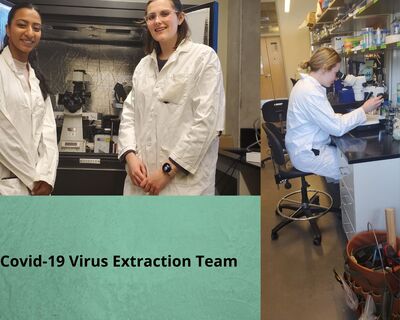
Covid-19 Virus Extraction

Project ID: 8

Students:

Lauren Beatty, Julia Friederich, Ananya Vajapayajula
The Covid-19 Virus Extraction project seeks to create a novel material for packing in wastewater filtration devices for the collection of SARS CoV-2 viral particles. Whereas previous products in this industry have used polymers to collect viral genomic material, this report explores the use of porous protein crystals with spike protein binding domains. These binding domains are concentrated inside porous protein crystals, which are able to store viral material.
Department:
Department of Chemical and Biological Engineering
Video presentation:
Link to project video
Advisors:
Dr. Chris Snow
Team photo

Covid-19 Virus-Like Particle Vaccine

Project ID: 9

Students:

Pippa Bailey, Derek Kendrick, Cam Lee, Chloe Stoffel, Katie Szumski
The goal for the Covid-19 Virus-Like Particle Vaccine project is to be able to create a vaccine based on a virus-like particle able to be mass-produced for use by the public. We want to theorize a vaccine production system and create a process model for the synthesis and production of the vaccine.
Department:
Department of Chemical and Biological Engineering
Video presentation:
Link to project video
Advisors:
Dr. Margarita Herrera-Alonso
Team photo

Development of Chandler Loop to evaluate hemocompatibility of biomaterials

Students:

Sydney Alderfer, Justice Cory, Michael Hernandez, Grace Taylorgoodall
When a material comes in contact with blood, proteins will adsorb on the surface followed by platelet adhesion, activation, aggregation and formation of the clot. This apparatus offers an experimental platform for testing interactions of blood with artificial materials and surfaces, their biocompatibility or, to be precise, hemocompatibility and hemorheological effects. This project will involve fabrication of the Chandler Loop system, and evaluating different materials fabricated in the laboratory (e.g., titania nanotube surfaces, polymeric nanofiber surfaces, etc.) with this Chandler Loop system. The students will evaluate in vitro hemocompatibility in static environment and in Chandler Loop system to get a better idea of how dynamic environment affects interaction of blood and its components with material surfaces. Different material characterization techniques such as SEM, XPS, etc. and biological techniques such as fluorescence microscope, ELISA, etc. will be used.
Department:
School of Biomedical Engineering
Video presentation:
Link to project video
Advisors:
Ketul Popat
Team photo

Device to Quantify Lameness for Orthopaedic Applications

Students:

Ben Bunten, Maddie D’Amato, Katie Graham, Travis Montoya, Sierra Williams
The goal of this project is to develop a method to evaluate lameness (a measure of limb use/disuse) in our ovine (sheep) research animals to assist with disease and treatment evaluation for orthopaedic applications. Currently we utilize subjective clinical examinations to determine lameness status. We are interested in developing a custom static weight bearing system ideally in conjunction with a scale such that while an animal’s whole body weight is being measured, the weight bearing status on each limb could also be evaluated. This would give us a quantitative measure of lameness which could be tracked over time.
Department:
School of Biomedical Engineering
Video presentation:
Link to project video
Advisors:
Katie Sikes
Team photo

Direct Air Capture

Project ID: 10

Students:

Jordan Kriznovic, Scott Morgan, Maxwell Towlen
The purpose of the Direct Air Capture project is to develop an improved process for carbon capture utilizing past years' project resources, to optimize the process design, to analyze the outlined process for the economic feasibility of large-scale carbon removal, and to optimize the carbon removal process by comparing design constraints between different models.
Department:
Department of Chemical and Biological Engineering
Video presentation:
Link to project video
Advisors:
Dr. Travis Bailey
Team photo

Ethylene Via Photosynthesis

Project ID: 11

Students:

Nouf Almutairi, Ethan Green, Shubh Koradiya, Matthew Raiche
The goal of this project is to provide a novel techno-economic analysis of the photosynthetic production of ethylene. This analysis would provide details about the feasibility of this project in today’s market as well as provide information for future development of this technology. This would allow future groups to efficiently direct laboratory research into relevant areas. Assuming feasibility, this analysis would also lay the ground for the first steps of realizing this project.  
Department:
Department of Chemical and Biological Engineering
Video presentation:
Link to project video
Advisors:
Dr. Ken Reardon
Team photo

Large-Scale Blue Hydrogen Via Partial Oxidation

Project ID: 12

Students:

Taz Al-Mamari, Luke Champness, Hayley Ma, Ian Park
The purpose of the Large-Scale Blue Hydrogen project is to research and develop an in-depth model of the blue hydrogen production process accomplished via natural gas partial oxidation and coupled with carbon dioxide capture.
Department:
Department of Chemical and Biological Engineering
Video presentation:
Link to project video
Advisors:
Dr. David Dandy
Team photo

Minimally Invasive Gallstone Removal Device

Students:

Ashley Daniels, Leslie DeLay, Courtney Doherty, Ryan Pyfrom, Emily Smith
Gallstone disease is a prevalent issue in our society and has become an increasing issue for patients with multiple comorbidities who are unable to receive surgery. Although lithotripsy and other treatments can be done, there are often reoccurring problems for patients with gallstone disease if the stone cannot be removed entirely. Currently, gallbladder sludge can be removed through a percutaneous drain for patients unable to safely undergo surgery. However, there is not a current method to remove gallstones in a similar fashion. The goal of this project is to create a device that could be inserted through a percutaneous drain and guided to a gallstone to break it down and remove it through the drain in the abdominal wall. Several guiding methods could be investigated to use as well such as a mechanically maneuvering device or interventional radiology. Creating a solution to this common problem in medicine could have the potential to greatly improve long-term care for patients with gallstone disease.
Department:
School of Biomedical Engineering
Video presentation:
Link to project video
Sponsors:
Blankenship Research, UCHealth, NIH
Advisors:
Team photo

Non-Invasive Hematocrit Sensor

Students:

Justin Duff, Sarah Ehrlick, Cara Leone, Nathan You
Design and develop a non-invasive line sensor for measuring hematocrit level of continually flowing blood during donation. Find a consistent correlation between measured electrical properties of blood and hematocrit levels that will help measure exact hematocrit levels of donors during blood draw. The sensor is to be clipped over the draw tube connecting the donor to the collection bag and measure live hematocrit level.
Department:
School of Biomedical Engineering
Video presentation:
Link to project video
Sponsors:
Terumo BCT
Advisors:
Team photo

Noninvasive Biopsy / Laser Scanning Reflectance Confocal Microscope

Students:

Lee Coonen, Nick Robinson, Aaron Roelfson, Corgan Thomas
Build the next generation reflectance confocal microscope for noninvasive diagnosis of skin and mucosal cancers. Current instruments that steer the laser beam with scan mirrors are large, bulky, and expensive. Our lab has prototyped a compact unit that scans with mechanical resonance of an optical fiber, but it is hard to align and assemble repeatably and relies on an expensive high-voltage piezo transducer. This design team will redesign the scanner to use a low-voltage magnetic driver, develop a repeatable assembly and alignment strategy, implement and test the design along with control and calibration electronics.
Department:
School of Biomedical Engineering
Video presentation:
Link to project video
Advisors:
Jesse Wilson
Team photo

Open-Source Insulin

Project ID: 13

Students:

David Choi, Alaa Eldeiry, Scott Maclean
The purpose of the Open-Source Insulin project is to understand the mechanisms by which lispro is produced in genetically engineering E. coli, how to maximize this production, and how to best purify the desired protein. Also, this study will conduct a preliminary economic analysis that reveals costs associated with the production plant, and potential profits after the insulin are sold.
Department:
Department of Chemical and Biological Engineering
Video presentation:
Link to project video
Advisors:
Dr. Ashok Prasad
Team photo

Prosthetic Socket Adapter

Students:

Owen Anderson, Maren Baur, Kile Kelly, Aidan Piasentin, Taylor Recaido
An issue with a transtibial prosthetic limb today is the reliability of the pyramid socket adapter component. The pyramid piece is placed between the socket and pylon to connect these components. Fatigue and over alignment of the pyramid socket adapter can lead to premature failure. To address this problem the team will explore potential solutions such as a 3D printed pyramid socket adapter utilizing a material to increase the fatigue life. These components are typically made of aluminum with steel. The objective is to increase the fatigue life of the socket adaptor component while sustaining affordability.
Department:
School of Biomedical Engineering
Video presentation:
Link to project video
Sponsors:
Quorum Prosthetics
Advisors:
Team photo

Small-Scale Blue Hydrogen Flared Gas

Project ID: 14

Students:

Sulaiman Alhedaithi, Fahad Alsubaie, Chris Guinn, Josue Ortiz Garcia
The purpose of the Small-Scale Blue Hydrogen Flared Gas project is to design a system that produces blue hydrogen from flared natural gas. Blue hydrogen is produced by splitting natural gas into hydrogen and CO2 using either Steam Methane Reforming (SMR) or Auto Thermal Reforming (ATR), and the resulting CO2 produced is captured and stored.
Department:
Department of Chemical and Biological Engineering
Video presentation:
Link to project video
Sponsors:
Dr. Tracy Perkins
Advisors:
Team photo

Sniftek

Students:

Wendy Perez, Melody Pierro, Luke Rhone, Brandon Rouault, Turner Solheim
Wouldn’t it be cool if you could breathe into your cellphone and have it tell you about any diseases or health issues for which you might need to see a doctor? This project originated as a low-cost Covid-19 tester project in the 2020-2021 academic year. In that project, the BME team chose to pursue the development of an electronic nose (e-nose) that could smell volatile organic compounds (VOCs). The 2020-2021 team identified that this e-nose technology is useful for diagnosis of many human health issues including Covid-19, asthma, COPD, liver disease, and lung cancer. By May 2021, the team had completed a first prototype, tested it, and identified areas for improvement. In the summer of 2021 one of the senior design students stayed on for an internship to further test and improve the prototype. The 2020-2021 proved the concept, but a redesign is needed before the device can be used for clinical testing. For the 2021-2022 academic year, it is expected that the team will take what was learned from the first prototype and related testing to: (a) Design a second-generation device that can be used for clinical studies; (b) Continue to improve the system used for testing prototypes with known concentrations of VOCs at known flow rates; (c) Perform human subject breath testing in a safe manner; and (d) Develop artificial intelligence (machine learning) techniques for analyzing and classifying test data.
Department:
School of Biomedical Engineering
Video presentation:
Link to project video
Sponsors:
Neuvatek, Bert Vermeulen, Kevin Lear
Advisors:
Team photo

Surgical Simulation

Students:

Niko Alexenko, Shervin Kazemi, Peter Lohrisch, Shelby Oke, Isabel Valdez
Create simulated organs and/or tissues in the abdominal cavity that have an embedded method of sensing/indicating in real time when excessive forces have been applied. The force modalities should be gripping, pulling, and pushing/compressing. The indications can be of a chemical/material formulation nature or electrical/computer science. An indication of how forceful the surgeon was is preferred (some sort of scale). The team should study forces generated by different laparoscopic instruments and the relation to specific tissue damage. The team can pick the organ(s)/tissue(s) of study based on their research of clinical relevance (which organs/tissue are easiest to damage or have the most impact on a patient when damaged). The organ(s)/tissue(s) of study must be made as close to the actual properties as possible (elasticity, compression rate, density, etc.). These characteristics will take research to determine. The ultimate output of this project would be realistic model(s) of organ(s) and/or tissue(s) that react realistically when handled by a surgeon and indicate in real time when they have been too forceful when handling and to which area of the organ.
Department:
School of Biomedical Engineering
Video presentation:
Link to project video
Sponsors:
Applied Medical
Advisors:
Team photo

Three-Dimensional Tissue Scaffolds for Culturing Liver Cells

Students:

Max Brown, Ashley Helton, Matt Steichen, Nathan Waanders
The Kipper research lab is developing new materials that have structure and composition tuned to support liver cell cultures. New technologies for culturing liver cells will enable improved drug toxicity screening studies that can accelerate the drug discovery process, and will reduce or eliminate the need for animal models currently used to test for liver toxicity. The goals of this project are to: 1. Prepare three-dimensional nanostructured tissue scaffolds from collagen and other extracellular matrix materials (using existing techniques you will learn in the Kipper lab). 2. Develop methods to bind and deliver growth factors (important signaling proteins) from the three-dimensional scaffolds. 3. Measure the growth factor release profile, and tune the growth factor release profile by changing the amount of growth factor and/or the method of growth factor immobilization.
Department:
School of Biomedical Engineering
Video presentation:
Link to project video
Advisors:
Matt Kipper, Ketul Popat, Liszt Madruga
Team photo

Tolmar Slow Release Polymer

Project ID: 15

Students:

Colin Hill, Bailey Kraljic, Caitlyn Williams, Connor Witt
The main goal of this project is to design a purification system to remove organic impurities produced in polymer synthesis.
Department:
Department of Chemical and Biological Engineering
Video presentation:
Link to project video
Sponsors:
Tolmar
Advisors:
Dr. Matt Kipper
Team photo

Universal C-arm Fluoro Tracker

Students:

Lauren Egan, Eddie Kitahara, Alex Scott, Sarah Verderame
Current C-arm integration on the StealthStation surgical navigation system only supports 2D C-arms with image intensifiers (II) because of the current Medtronic fluoro tracker design. II C-arms are becoming antiquated with most integrated models already at end of vendor support, resulting in greatly reduced sales of II C-arms. Additionally, Medtronic is expected to run out of integration kits by FY25, cutting off additional integrations and an estimated $17M/year in revenue. The more modern flat panel detector (FD) design is becoming much more popular, especially in developing markets, and offers a larger field of view in scans. Currently for the StealthStation S8, there is not a solution for a fluoro tracker that can be used in 2D fluoroscopic registration with a FD C-arm. The student team will design a solution for attaching the existing fluoro tracker to a flat panel detector or redesign the C-arm fluoro tracker for use on both standard image intensifiers and flat panel detectors.
Department:
School of Biomedical Engineering
Video presentation:
Link to project video
Sponsors:
Medtronic
Advisors:
Team photo

Universal Mechanical Cycling Fixture

Students:

Ashley Bloch, Megan Frederes, Ross Lohrisch, Benjamin Markworth
Mechanical reliability is an important component of hardware test. It is used to verify requirements around the usable life of mechanical components on systems we develop. Examples of components often under test include drawers, casters, cart docking mechanisms, monitor arms, instruments, and cables. These components need to be exposed to 100s if not 1,000s of cycles and in different forms of applied force (torsion, bending, pulling, compression). In order to test mechanical reliability of components, unique fixtures are created to actuate the components under test. Unique fixture development and qualification is timely and cost intensive for each setup. This team will design a solution for a modular, automated test fixture that can be applied in a variety of different mechanical reliability protocols.
Department:
School of Biomedical Engineering
Video presentation:
Link to project video
Sponsors:
Medtronic
Advisors: