Undergraduate Programs

Senior Design Program

Working throughout their final year, each senior design project covers a wealth of fascinating engineering and science research. 

Engineering Days (E-Days) is a long-standing CSU tradition that allows senior undergraduate students the opportunity to showcase their senior design projects and senior practicum research. 

Celebrate our

Senior design projects
at E-Days!

April 23, 2026
Lory Student Center and Plaza

E-Days is an exciting event for Colorado State University engineering seniors. It is a day they get to present to the world everything they have learned through their undergraduate journey and how they applied it to solve local and global problems. 

2026 Projects

Projects from other years: 2021 | 2022 | 2023 | 2024 | 2025 | 2026

Chemical and Biological EngineeringSchool of Biomedical EngineeringSchool of Biomedical and Chemical Engineering
Team photo

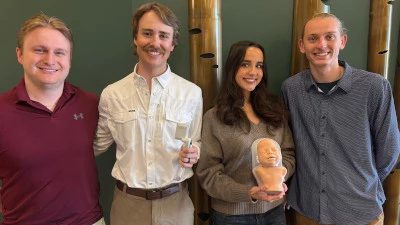
Advancing Neonatal Video Laryngoscopy

Students:

Jackson Emry, Jacqueline Oswald, Matthew Ashworth, Stephen Ritschard
Our team aims to develop a Video Laryngoscope (VL) specifically for neonatal intubation procedures. 1 in 10 infants are delivered prematurely in the United States, which often comes with health complications that can result in bradycardia, oxygen desaturation, and cardiac arrest. In order to combat these life-threatening conditions, practitioners can choose to intubate the neonate using a laryngoscope. Despite a growing academic consensus that video laryngoscopes–when compared to direct laryngoscopes–decrease adverse event rates while dramatically improving patient outcomes, VLs are rarely used in practice due to shortcomings of current products on the market. Our team is starting with a design-centric, customer-focused approach to create the first bespoke video laryngoscope specifically designed with neonates in mind. We are working hand-in-hand with clinicians to create a product that will provide an intuitive and improved intubation experience for post-delivery care.
Department:
School of Biomedical Engineering,
School of Biomedical and Chemical Engineering
Sponsors:
Medtronic
Advisors:
Dr. Bo Chen
Team photo

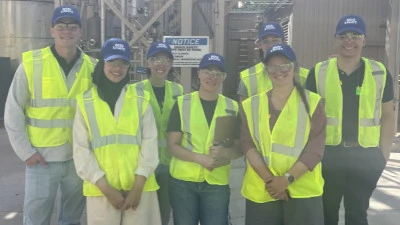
Anheuser-Busch Ethanol Desulfurization

Project ID: 1

Students:

Hajar Alatar, Alec Brickl, Aneece Douglas, Bethany Kantack, Erika Mathison, Zach Maxwell, Bennett Norton
The Anheuser-Busch Fort Collins, as part of their beer-making process, is currently producing 40,000 gallons per month of waste ethanol. Off-site sample analysis has shown that their waste ethanol streams contain sulfuric compounds, making the ethanol not viable for commercial use. Currently, this ethanol is being outsourced for desulfurization, but Anheuser-Busch is seeking a solution that will allow it to desulfurize the waste ethanol streams on-site. The goal is to desulfurize to a level of at most 3 ppm, and ideally 1 ppm sulfuric compounds in the waste stream.
Department:
Department of Chemical and Biological Engineering
Video presentation:
Link to project video
Sponsors:
Anheuser-Busch
Advisors:
Nate Murphy (Anheuser-Busch), Aaron Huffsmith (Anheuser-Busch), Dave Seidl (Ret. Lockheed/Martin)
Team photo

Anheuser-Busch Waste Ethanol Repurposing

Project ID: 2

Students:

The primary objective of this project is to convey the importance of energy and financial optimization to the audience. Anheuser-Busch’s ethanol waste stream causes significant financial loss to the company, and the company values sustainability and climate change efforts regarding its processes. The Colorado State Anheuser-Busch Ethanol Repurposing Senior Design Team is tasked with finding ways to convert the ethanol into profitable and sustainable products. Through their research, they have discovered that bioethylene and hydrogen production provide a promising route towards environmental protection and economic stability.
Department:
Department of Chemical and Biological Engineering
Video presentation:
Link to project video
Sponsors:
Anheuser-Busch
Advisors:
Nate Murphy (Anheuser-Busch), Aaron Huffsmith (Anheuser-Busch), Dr. Mark Gale (CSU), Craig Anderson (Ret. Lexmark International)
Team photo

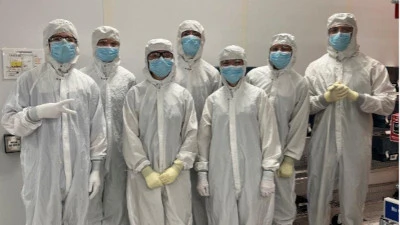
Broadcom UPW Reuse

Project ID: 3

Students:

Laryssa Aragon, Katelyn Brennan, Adam Davis, Jake Footit, Marina Kasperbauer, Payton Musselman, Collin Wald, and Karina Zito.
The goal of this project is to design a system that will reclaim 10% of the wastewater from the equipment within Broadcom’s semiconductor fabrication process. The designed system must repurify the water to UPW standards to be reused in the same capacity. This will accomplish reduced costs for Broadcom, support sustainability, and lower environmental impact.
Department:
Department of Chemical and Biological Engineering
Video presentation:
Link to project video
Sponsors:
Broadcom
Advisors:
Kamran Asad (Broadcom), Kelly Boyle (Broadcom), Matt Brown (Broadcom), Dr. David Dandy (CSU)
Team photo

City of Fort Collins Utilities: DWRF Bio Towers Repurpose

Project ID: 4

Students:

Khaled Alajmi, Medeth Alajmi, Abdullah Alzoubi, Wilson Riley, Ethan Sicat, Marc Smoorenburg, Scott Sundheim, Jacob Van Ens, Gavin Vonalt,
The objective of this project is to retrofit the defunct biotowers at the Drake Water Reclamation Facility to enhance nutrient removal, particularly phosphorus and nitrogen, to meet upcoming Colorado regulations. The project focuses on repurposing existing infrastructure to support biofilm or microbial growth that can biologically assimilate these nutrients from municipal wastewater. Laboratory experiments and simulations will be conducted to identify a technically feasible and economically viable bioreactor configuration capable of operating under variable conditions. Overall, the goal is to develop a cost-effective, sustainable solution that improves effluent quality without requiring significant new infrastructure investments.
Department:
Department of Chemical and Biological Engineering
Video presentation:
Link to project video
Sponsors:
City of Fort Collins Utilities
Advisors:
Jan Harris (City of Fort Collins Utilities), Mandy Rasmussen (City of Fort Collins Utilities), Christina Schroder (City of Fort Collins Utilities), Kelly Wasserbach (City of Fort Collins Utilities), Dr. Christie Peebles (CSU), Dr. Rebecca Atedero (CSU)
Team photo

Illuminating Women's Health: Luminescent Lanthanide Complexes for Disease Marker Detection

Students:

Emma Goodall, Bella Plath, Elijah Jackson, Alec Brickl
Preeclampsia is a life-threatening hypertensive disorder that can develop in pregnant patients. Current clinical practices diagnose preeclampsia at the onset of symptoms, which is not ideal for optimal care. The project goal is to develop a blood-based biosensor to detect enzymes associated with preeclampsia at early stages to improve outcomes. To do this, the team has been developing a biosensor composed of a short engineered protein sequence paired with a lanthanide. Lanthanides’ luminescent properties make them effective for sensitive detection. Laboratory experiments will be conducted to ensure the feasibility of the biosensor under complex biological conditions. Overall, the goal of the team is to develop a sensitive, selective, and biocompatible biosensor for disease detection to improve women’s health.
Department:
School of Biomedical Engineering,
School of Biomedical and Chemical Engineering
Advisors:
Matt Kipper
Team photo

KAFO Recovery Brace

Students:

Jaclyn Andreson, Alyssa Basaldua, Carter Brighton, Elizabeth Emberger, Dillan Paul, Tyson Williams
The KAFO (Knee-Ankle-Foot Orthosis) Recovery Brace project is a hand-free crutch alternative that focuses on restoring natural walking biomechanics while minimizing muscle atrophy during lower-limb rehabilitation. Devices such as crutches, walking boots, knee braces, and leg scooters disrupt natural gait mechanics that require upper-body compensation, or immobilize joints. This brace uses a mechanical knee joint to allow controlled motion while redistributing weight to the thigh, keeping the injured region, 100% non-weight bearing, and preserving proper gait mechanics. After injury or surgery, limited movement often causes compensatory gait patterns and disuse of key muscle groups, accelerating muscle weakening and joint stiffness. Normal gait depends on coordinated knee flexion, ankle mobility, weight transfer, and balanced muscle activation to maintain stability and efficiency. The project is sponsored by the Venture Funded Senior Design Program and supported by a gift from Jeff Tovar in honor of Dr. Temple Grandin. In addition to our advisors, Jeff Samson, Bert Vermeulen, and Ben Gadomski, whose guidance promotes independence, confidence, and improved quality of life for individuals using the recovery brace.
Department:
School of Biomedical Engineering,
School of Biomedical and Chemical Engineering
Sponsors:
Bert Vermeulen, Temple Grandin
Advisors:
Ben Gadomski, Bert Vermeulen, Jeff Samson
Team photo

Kasooli: Corn Husk and Banana Fiber Menstrual Solution

Students:

Amber Clark, Andy Quach, Bella Kaze, Ella Doerr, Gabriela Jonasson
Kasooli aims to develop fully biodegradable menstrual pad solutions to address menstrual product scarcity among young women in Uganda. The project focuses on providing a sustainable, accessible, and environmentally responsible alternative to conventional menstrual products. A primary objective of this work is the validation of the biodegradable menstrual pads to ensure their safety, effectiveness, and reliability in accordance with relevant Ugandan standards and regulations.
Department:
School of Biomedical Engineering,
School of Biomedical and Chemical Engineering
Advisors:
Samantha Preuss and Samuel Bechara, PhD
Team photo

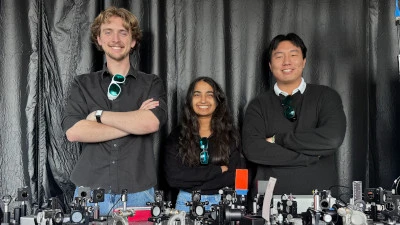
Laser Microscopy for Tissue Imaging and Visualization

Students:

Brenton Yasuoka, Alex Tocco, Anisha Kalla
Our team has developed a singular process derived from three key concepts: Reflectance Confocal Microscopy, an Automated Z-Dimensional Staging system, and software to transform images into three-dimensional renderings that can be further processed into physical, 3D printed models. Our design is based around the need for cost-effectiveness, improved image-based diagnostics, and better patient-doctor communication. In theory, the design, with slight and novel modifications, could be used for scanning in-vivo skin lesions with competitive results and costs to similar devices already in use. The automated z-dimensional staging system is designed with accuracy and repeatability in mind. In order to validate these two objectives, we also incorporated a Michelson-Interferometer to measure the translational distance of the stage. Software was developed as a MATLAB script to denoise the image data, and restructure the data into an accurate and interpretable 3D model of the sample.
Department:
School of Biomedical Engineering,
School of Biomedical and Chemical Engineering
Advisors:
Dr. Jesse Wilson
Team photo

Multi-Sensor Smart Well Platform for Real-Time Measurement of Cellular Metabolism

Students:

Yousef Faour, Garrett Fuhrman, Owen Geiger, Noah Hernandez, Kami Hinderberger, Renzo Spagnuolo
This project is the development of instrumentation for direct measurement of single cellular metabolism.
Department:
School of Biomedical Engineering,
School of Biomedical and Chemical Engineering
Sponsors:
Dr. Tom Chen
Advisors:
Dr. Tom Chen
Team photo

Ovarian Cancer Immunotherapy Device

Students:

Zoey Blase Bryan Brown Delaney Endean Nick Grasso Lael Niemann
This project focuses on a key step in producing a personalized cancer immunotherapy. The treatment uses a patient's own tumor cells, which are safely inactivated so they can no longer replicate but still retain their surface antigens that will stimulate an immune response from the body. Our team focuses on the ultraviolet (UV) illumination stage of the Innocell process. Using HeLa cells as a model, we combine riboflavin (vitamin B2) with controlled UV light to deactivate cells while preserving their surface structure. We are designing a sterile, single-use containment system that delivers consistent treatment, minimizes cell loss, and enables safe operation outside of highly specialized laboratory facilities. By improving reliability and containment, our work helps move personalized immunotherapy from centralized labs toward hospital-based care.
Department:
School of Biomedical Engineering,
School of Biomedical and Chemical Engineering
Sponsors:
PhotonPharma
Advisors:
Susan Yonemura and Terry Cussen
Team photo

Paw Pilot

Students:

Heidi Hamilton, Zoe Cowman, Caroline Pita, Sophie Phillips
More than half of the country owns a pet dog, and if there’s one thing these owners have in common, it’s that they treat their dogs like family. Unfortunately, 10% of these families have a dog facing visual impairment. A dog losing their eyesight decreases the quality of life for both the dog and its family. Visually impaired dogs have difficulty navigating the world, which leads to higher concerns around safety and mobility. Our product, Canine Whiskers, is a collar-like device designed to guide visually impaired dogs and provide them with increased independence. Our device uses mechanosensation from 8 evenly distributed whiskers to allow visually impaired dogs to “feel” their environment. When a dog puts on the Canine Whisker collar, there are fewer worries, more tail wags, and a more fulfilled life.
Department:
School of Biomedical Engineering,
School of Biomedical and Chemical Engineering
Advisors:
Sasha Foster, Laura Southworth, Katie Sikes, Emily Van Zeeland
Team photo

Production of Models for Surgical Training

Students:

Mimi Abadir, Bryson Arnott, Adrian Deputat, Hayley Stern, AbbyMae Wheaton
Laparoscopic ovarian cystectomy is a minimally invasive procedure that removes a fluid filled pocket of tissue from an ovary. This surgery requires a great deal of training before becoming proficient. Most training methods are inaccessible or inaccurate, however, Simsei Simulations, a division of Applied Medical, developed a silicone model that allows for realistic, accessible training. The Production of Models for Surgical Training Design Team’s objective was to develop a production method for these models, prioritizing accuracy through uniform wall thickness and operator safety. The team has spent this year developing a rotomolding manufacturing process as well as formulating the silicone in order to balance accuracy of the model with repeatable characteristics.
Department:
School of Biomedical Engineering,
School of Biomedical and Chemical Engineering
Sponsors:
Applied Medical
Advisors:
Zachary Marin and Peter Scolaro
Team photo

Sip Secure

Project ID: 5

Students:

Amber Clark, Greta Coyner, Sol Doutrich, Alex Gallegos, Vivian Newell, Jesse Shergill, Renzo Spagnuolo, Tara Stout, Kaleb Surguy, Kaleb Zimmer
Sip Secure aims to develop a portable, user-friendly device capable of detecting common drink-spiking drugs such as GHB, GBL, and ketamine. The project integrates molecularly imprinted polymer (MIP) technology with electrical sensing and mechanical design to create a fast, discreet, and reliable detection tool. Customer feedback, competitive analysis, and engineering principles guide our approach to ensure the device meets real-world needs. Ultimately, our goal is to reduce the risks associated with drink tampering and promote safety in social environments.
Department:
Department of Chemical and Biological Engineering
Video presentation:
Link to project video
Advisors:
Dr. Mark Gale (CSU), Bert Vermeulen (CSU)
Team photo

Temporary Cardiac Pacemaker Adapter

Students:

Brooke Bauer, MaryKatherine McCarthy, Samuel Schroeder, Raylee Senn
In some circumstances, patients with dangerously slow heart rhythms need a temporary pacemaker. These are utilized when permanent pacemakers cannot be immediately placed due to limited resources or when patients are awaiting a diagnosis. Alligator clips are typically used to connect the pacing lead to a temporary external programmer. If the clips detach, the device fails to pace the heart. Our team was tasked with designing a more suitable adapter to connect the pacemaker leads to the external programmer. This design prioritizes the safety of the patient by removing the alligator clips and introducing a single rigid clamp. Not only does it increase the accuracy of signal transmission, but it also provides ergonomics for ease of use, leading to a more comfortable solution for both patients and healthcare professionals.
Department:
School of Biomedical Engineering,
School of Biomedical and Chemical Engineering
Sponsors:
UCHealth
Advisors:
"David Katz, MD Ethan Ellis, MD Michael Ronfeldt"
Team photo

Texas Instruments Water Reclamation

Project ID: 6

Students:

Aimee Errington, Hailey Harrington, Brooke Hazzard, Kira Lorec, Caroline Pita, Scott Ropiecki, Isaac Rubio, Su San Tun Yar,
Our project objective is to design a water reclamation process for Texas Instruments’ CMP (chemical mechanical planarization) wastewater stream at the Richardson, Texas, facility. The goal is to treat the slurry containing effluent so that a large fraction of the water can be recycled back into the plant while meeting TI’s water quality specifications. To do this, we developed a process flowsheet that combines particle removal pretreatment with membrane separation and deionization steps. Overall, the design aims to reduce freshwater use and wastewater discharge in a way that is both technically feasible and cost-effective for the facility.
Department:
Department of Chemical and Biological Engineering
Video presentation:
Link to project video
Sponsors:
Texas Instruments
Advisors:
Frank Luna (Texas Instruments), Dr. German Parada (CSU)
Team photo

Tolmer Polymer Optimization

Project ID: 7

Students:

Bryan Brown, Jonnina Edmunds, Sreya Karumanchi, Roman Schwab, Andrew Van Orden, Hans Van Zuiden
The purpose of this project is to develop a process for developing a 50:50 ratio of Poly-Lactic-co-Glycolic Acid for drug delivery release. The final product must be a medical-grade polymer. The bulk of the project will be theoretical model for how the product will be developed.
Department:
Department of Chemical and Biological Engineering
Video presentation:
Link to project video
Sponsors:
Tolmar
Advisors:
Jeremy Roath (Tolmar), Nick Eddy (Tolmar), Dr. Matt Kipper (CSU)
Team photo

UroNet - A Microfluidic Platform for Non-invasive Cancer Screening

Students:

Laryssa Aragon, Luke Pettus, Kayla Titus, Fig Veldhuizen, and Hannah Wochner
This project aims to develop a microfluidic device that captures and concentrates circulating tumor DNA (ctDNA) from urine for early cancer detection. Current diagnostic approaches are often invasive, costly, and frequently identify cancer only after it has progressed. While blood-based liquid biopsies offer promise, they require specialized infrastructure and trained personnel, limiting accessibility. Our approach integrates engineered CJ protein crystals, developed in Dr. Snow’s laboratory, into a microfluidic platform designed to selectively bind and concentrate ctDNA from urine samples. The device focuses on efficient DNA capture, controlled washing, and release for downstream analysis. By leveraging a noninvasive sampling method, this technology seeks to improve accessibility, reduce barriers to testing, and support earlier detection and ongoing cancer monitoring. This project is sponsored by Dr. Snow’s laboratory and contributes to the long-term development of a user-friendly liquid biopsy platform suitable for clinical settings.
Department:
School of Biomedical Engineering,
School of Biomedical and Chemical Engineering
Advisors:
Dr. Snow
Team photo

Wheelchair Headrest to Promote Scalp Health

Students:

Rosa Dang, Ava Fisher, Evan Law, Alvina Yeboah
This project aims to increase the mobility and biocompatibility of a wheelchair headrest. Current headrests offer only one supporting position and have poor biocompatibility, resulting in hair damage, matting, scalp irritation, and even severe pain from constant use. Our Wheelchair Headrest to Promote Scalp Health combats these issues through an intuitive design by improving mobility and upgrading materials that interact with the patient’s scalp. Additional joints were added to the system to provide two lateral resting positions for the patient, allowing access for hair care. Material changes to reduce friction and increase breathability further decrease matting and sweat accumulation. This novel approach and versatile design have the potential to assist more wheelchair users and caretakers, enabling a higher quality of life.
Department:
School of Biomedical Engineering,
School of Biomedical and Chemical Engineering
Sponsors:
Matt Baretich, Anja Wahl Wells
Advisors:

Corporate Involvement and Workforce Development:

E-Days Showcase

Are you looking to find support for the design, modification, or development of a new product, process, testing apparatus, or system? We can help!

Engineering Days (E-Days) is a long-standing tradition of CSU excellence, offering senior undergraduate students an opportunity to showcase the completion of their senior design projects.

By participating as a corporate senior design sponsor, companies can make a financial contribution toward project materials and overall operations of senior design.

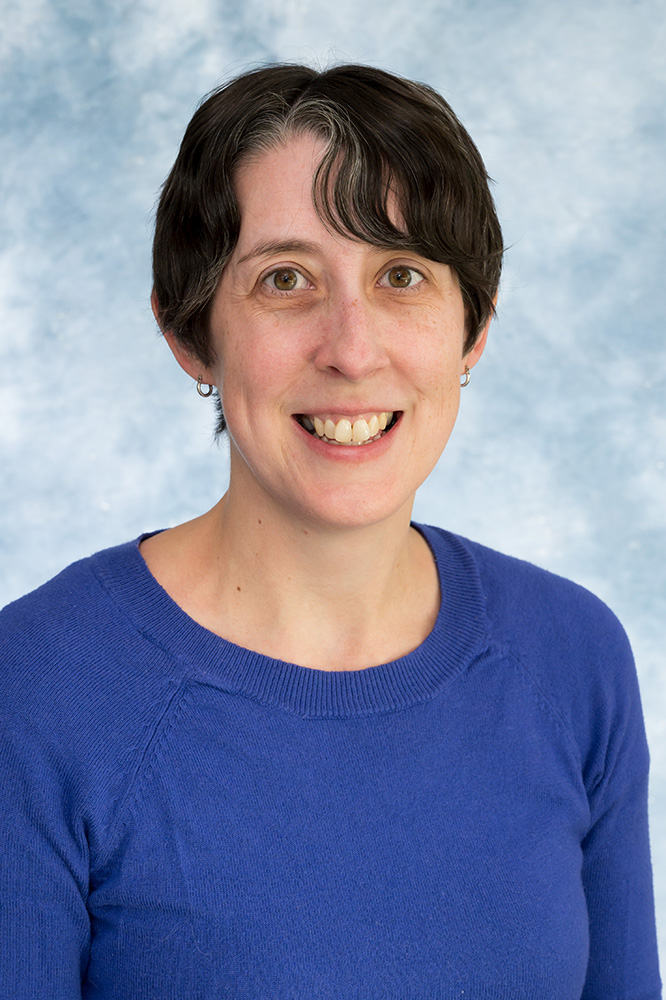
Portrait photo of Ellen Brennan-Pierce, Research Scientist
Biomedical Engineering projects:
Ellen Brennan-Pierce
Portrait photo of Minnie Piffarerio, Associate Professor of Practice, Colorado State University Department of Chemical and Biological Engineering; credit: Russell Dickerson, Walter Scott, Jr. College of Engineering, August 2022.
Chemical and Biological Engineering projects:
Minnie Piffarerio

Questions about our senior design program?

We're ready to help!

Do you have a question that’s not featured on our website? Whether you are interested in sponsoring projects, supporting our students, or have something not listed, email your questions to us.