
Research Areas
The BlueGreen Decisions Lab is changing the way infrastructure systems are understood, designed, and governed. Confronting today’s complex water, energy, and climate challenges requires professionals who can integrate technical knowledge with behavioral insight, ecological understanding, and advanced decision-support tools.
BlueGreen Decisions is developing interdisciplinary methods that connect systems engineering, environmental science, and decision science to support more sustainable, resilient, and equitable infrastructure. The lab is training a new generation of systems leaders, engineers, researchers, and practitioners equipped to model uncertainty, engage diverse stakeholders, and design adaptive solutions at the intersection of human and environmental systems.


The Colorado State University BlueGreen Decisions lab is led by Dr. Steven A. Conrad. He is an Associate Professor in the Department of Systems Engineering at Colorado State University. His academic background includes dual B.S. degrees in Optical Engineering and Psychology from the University of Arizona, an M.S. in Environmental Technology Management from Arizona State University, and a Ph.D. in Resource and Environmental Management from Simon Fraser University, Canada. He has led innovative research in the AI-augmented decision making, water‑energy nexus, human‑environment systems modeling, and sustainable urban infrastructure. Before CSU, Dr. Conrad chaired the Future Waters Research Excellence Cluster at the University of British Columbia and served as Associate Director of Simon Fraser University’s Pacific Water Research Centre. His work spans over 25 years to inform policy, resilience, and decision‑making in water and energy management and on socio‑technical systems. Among his recent honors is the American Water Works Association’s George Warren Fuller Award in 2021, underscoring his impact on water‑industry scholarship.
Research Initiatives
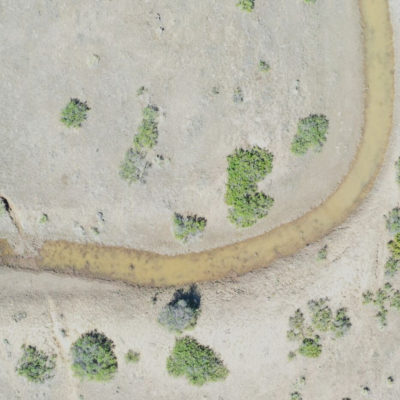
Water-Energy Nexus and Urban Systems Resilience
We study how water and energy systems interact in urban environments, particularly under conditions of stress, change, and uncertainty. By modeling feedbacks across technical, ecological, and social dimensions, our work supports infrastructure decisions that are both resilient and adaptive. We collaborate with utilities and planners to improve long-term planning, optimize system performance, and enhance the capacity of infrastructure systems to respond to climate and demand variability.
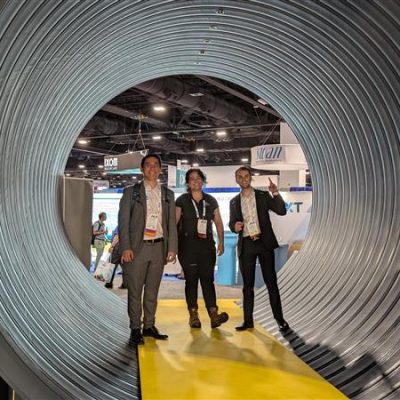
Human Dimensions of Engineering and Infrastructure
Understanding how people shape and respond to engineered systems is essential for building sustainable infrastructure. Our research explores the cognitive, institutional, and social dynamics that influence engineering design, technology adoption, and system governance. We develop models and tools that integrate behavioral insights into infrastructure planning and management, ensuring that engineered systems are aligned with human needs, values, and capacities. Applications include the identification of behavioral, perceptual, and experiential factors that influence individuals’ engagement with electric vehicle infrastructure to inform the design of user-centered, equitable, and sustainable transportation systems.
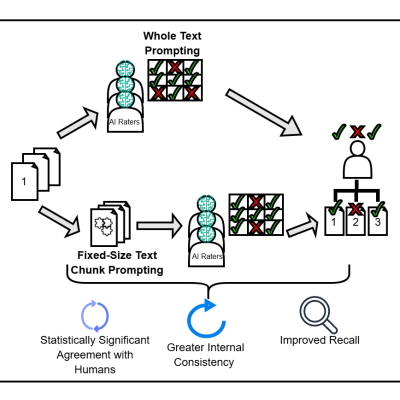
AI-Augmented Decision Support in the Built Environment
We examine how artificial intelligence and machine learning can enhance, rather than replace, human judgment in complex decision contexts. Our work focuses on developing hybrid systems that pair data-driven models with human expertise, improving trust, transparency, and performance in infrastructure operations. Applications include predictive analytics, scenario planning, and intelligent control systems across the water-energy-climate nexus.
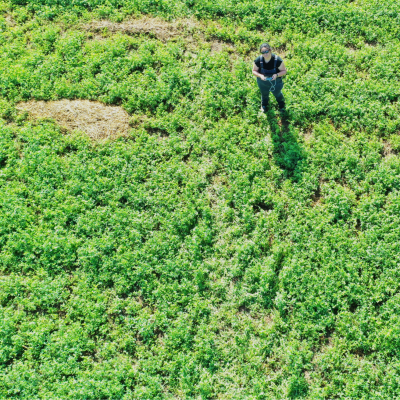
Nature-Based Solutions and Ecological Infrastructure
We investigate how natural systems can be integrated into infrastructure design to promote ecological resilience, climate adaptation, and community well-being. From green stormwater systems to ecosystem-based flood management, our work evaluates the performance and co-benefits of nature-based solutions across scales. We aim to support infrastructure decisions that regenerate, rather than degrade, environmental systems.
Risk, Resilience, and Adaptive Infrastructure Planning
Critical infrastructure systems face growing threats from climate change, aging assets, and cascading failures. We develop tools and frameworks for identifying vulnerabilities, assessing risk, and supporting adaptive planning across sectors and scales. Our research emphasizes cross-sector coordination, stakeholder engagement, and the development of governance strategies that enhance infrastructure resilience over time. Applications include assessing the systemic risks posed by EV disengagement to transportation decarbonization objectives, as well as developing adaptive planning strategies and frameworks to bolster the resilience of EV charging infrastructure.
Recent News
- 2025 Children’s Water Festival December 17, 2025