
Our Group
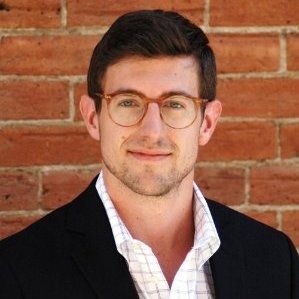
Dr. Graeme Troxell, Research Scientist
Dr. Graeme Troxell is a Postdoctoral Fellow in Systems Engineering at Colorado State University. His research spans infrastructure resilience, human-AI teaming, systems theory, and the epistemology of modeling in engineering. He studies how systems can be designed and managed to support robust decision-making under uncertainty, particularly in complex socio-technical contexts. Dr. Troxell holds degrees in Systems Engineering and Philosophy, and has published on systems theory, soft robotics, localized energy policy, systems architecting urban infrastructure, and engineering education.
- Infrastructure Resilience & Decision Support: Cascading failures and interdependencies in critical infrastructure systems, developing models and decision frameworks to support lifecycle management and operational planning under uncertainty.
- Human-AI Teaming in High-Stakes Contexts: The performance, trust, and coordination dynamics of human-AI teams in critical decision environments, with implications for design, training, and deployment of decision-support systems.
- Foundations of Systems Modeling: The theoretical and epistemological foundations of modeling in engineering, with particular interest in systems theory, model development, and the criteria for model transferability.
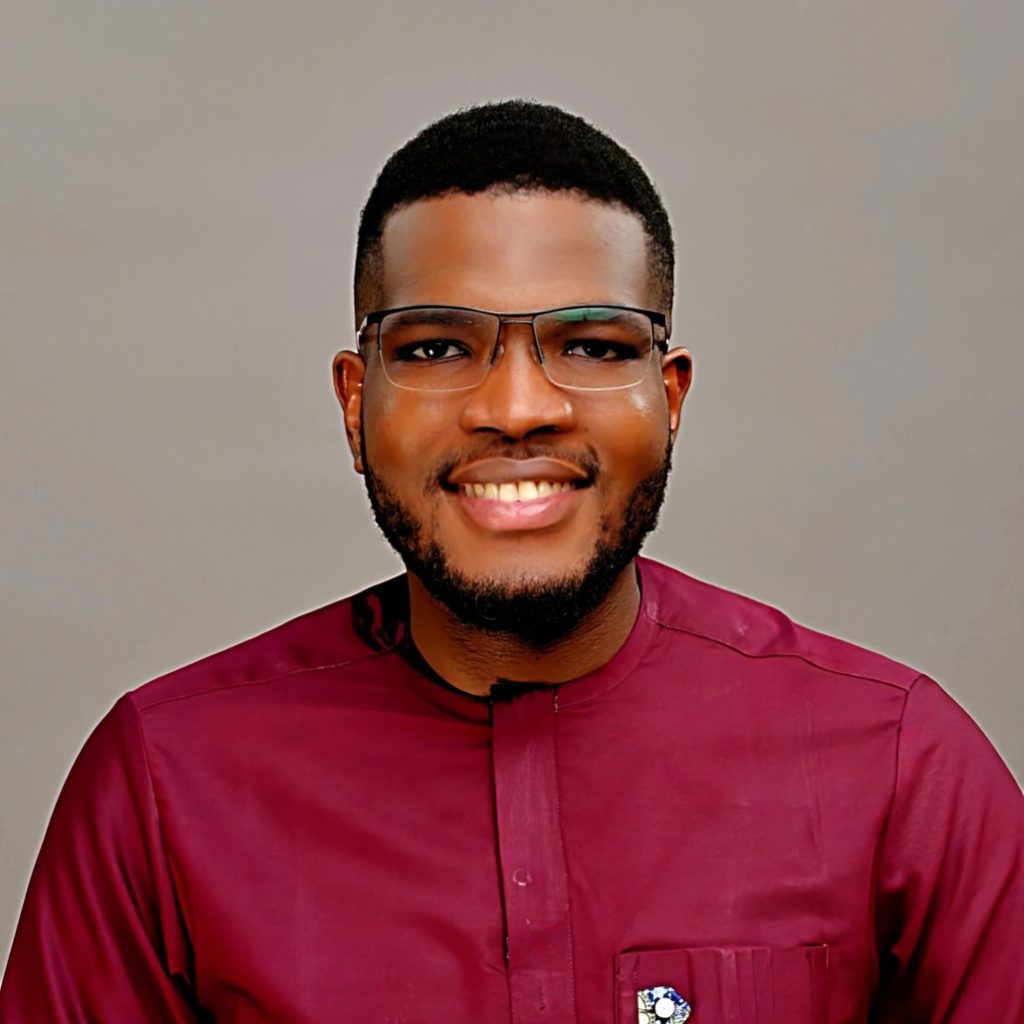
Joshua Oluwatumise, Ph.D. Student
Joshua earned his B.S. in Mechanical Engineering from Covenant University and his M.Eng. in Engineering Management from Colorado State University. He is a Ph.D. student in Systems Engineering and a Graduate Research Assistant in the Blue-Green Decisions Lab. His research focuses on electric vehicle (EV) disengagement, studying users who discontinue or underutilize EVs and how charging infrastructure and behavioral factors impact long-term EV adoption. His goal is to support a lasting and equitable transition to sustainable transportation. He also researches flexible operations of water treatment facilities relating to energy efficiency.
- EV disengagement and discontinuance behavior
- Charging infrastructure reliability
- Human-centered modeling for sustainable mobility
- Modeling and analysis of desalination facilities.
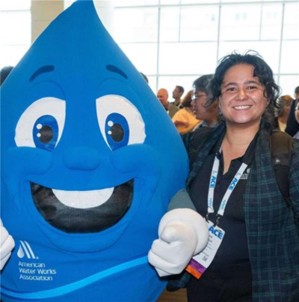
Dixie Poteet, Ph.D. Student
Dixie L. Poteet is currently a Ph.D. student in the Systems Engineering Program at Colorado State University. Being born and raised in Colorado, Dixie was instilled with a respect for water’s vast and powerful impacts early on. Dixie first came to CSU in 2017 thanks to the Walter Scott, Jr. Scott Scholars Program and went on to complete her B.S. and M.S. in Civil Engineering with a focus on Water Resources. She is dedicated to investigating effective, stakeholder-based solutions and strategies to the wicked problems surrounding water allocation. Her Ph.D. work centers around the question: “Before we implement solutions, why don’t we talk—and listen—to the people those solutions will impact first?”
- Water Management Solutions and Allocation Strategies | PL: “Everything (past, present, and future) is water!”
- Human Dimensions of the Decision Making Process | PL: “Let’s make these tools usable and accessible, and these solutions easy to implement.”
- Stakeholder Based Solutions | PL: “Before we start rolling out new solutions, why don’t we talk to the people who affect – and are affected by – those solutions first?”
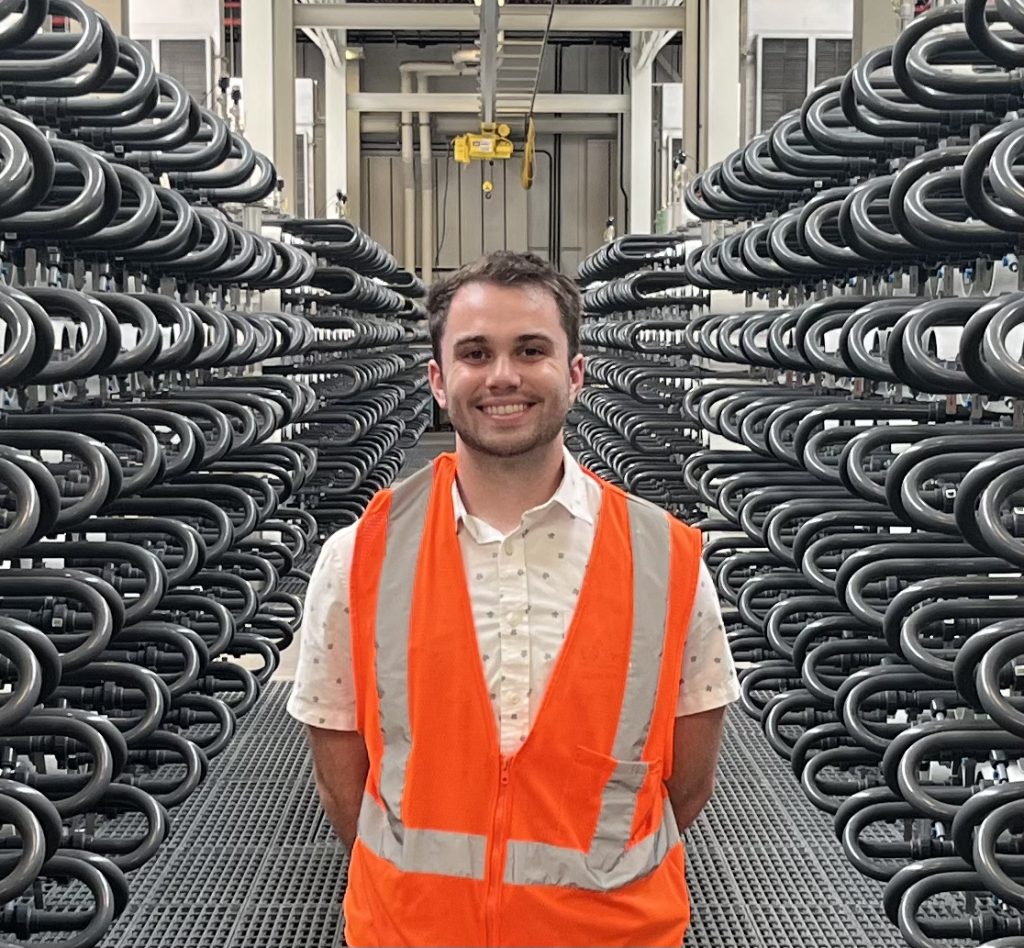
Josh Rodriguez, Ph.D. Student
Josh earned his B.S. in Systems Engineering from the University of North Carolina at Charlotte. He joined the Blue-Green Decisions Lab as a Ph.D. student with a focus on applications of digital twins for integrating energy data into the flexible operation of desalination plants. In this research, he is working with the National Alliance for Water Innovation to develop a digital twin model of a desalination facility to explore the technical and economic limitations of flexible operations. He also researches applications of artificial intelligence in urban water systems, especially regarding unstructured data analysis and Human-AI teaming.
Digital Twins in Urban Water Systems: Exploring the common characteristics and applications that generate value in digital twin applications for water treatment, distribution, and conveyance
Modeling and Analysis of Desalination Facilities: Comparing data-driven and physics-based modeling approaches to better define the toolkit available for high-fidelity simulation in a digital twin environment
Water-Energy Co-Benefits: Modeling the economic and technical feasibility of flexible desalination in response to energy grid signals
Human-AI Teaming in the Urban Environment: Researching applications of Artificial Intelligence in the management of urban systems
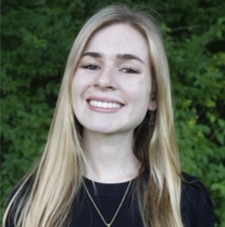
Naomi Michael, M.S Student
Naomi earned a B.S. in Natural Resources and Environmental Science from Purdue University. She is now a M.S. student in the Bluegreen Decisions Lab focusing on systems dynamics. For her research she is working on a project for the National Science Foundation that looks at a zero liquid discharge method of desalinization as a way to desalinize brackish water. This would be an improved system that uses solar powers for energy and produces less harmful brine into the environment than traditional desalinization processes. She is creating causal loop diagrams that show how the zero liquid discharge desalinization would affect the carbon, water, and energy nexus. Also evaluating how people perceive the system and the effect it would have on policy.
- System Dynamic Modeling: How changes in energy use, water use, etc. effect the system as a whole
- City System Modeling: How a city’s water systems and energy systems interact with the global carbon and water cycles and how this can change over time
- Climate Change Solutions: How do droughts impact a city’s water supply and how can this be combatted sustainably
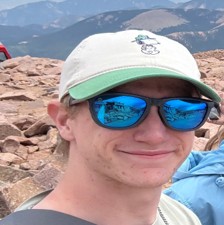
Hunter Lampson, Undergraduate Student
Hunter Lampson is a third-year undergraduate student in Mechanical Engineering from Kansas City. His role in the lab focuses on 3D printing support and inventory management, ensuring researchers and graduate students have the resources needed to develop and prototype physical models.
Lab Alumni

Katelyn Whiting
M.S. Systems Engineering | Spring 2025
Dynamic Emissions Modeling for Sustainable Algal Carbon Nanofiber Production
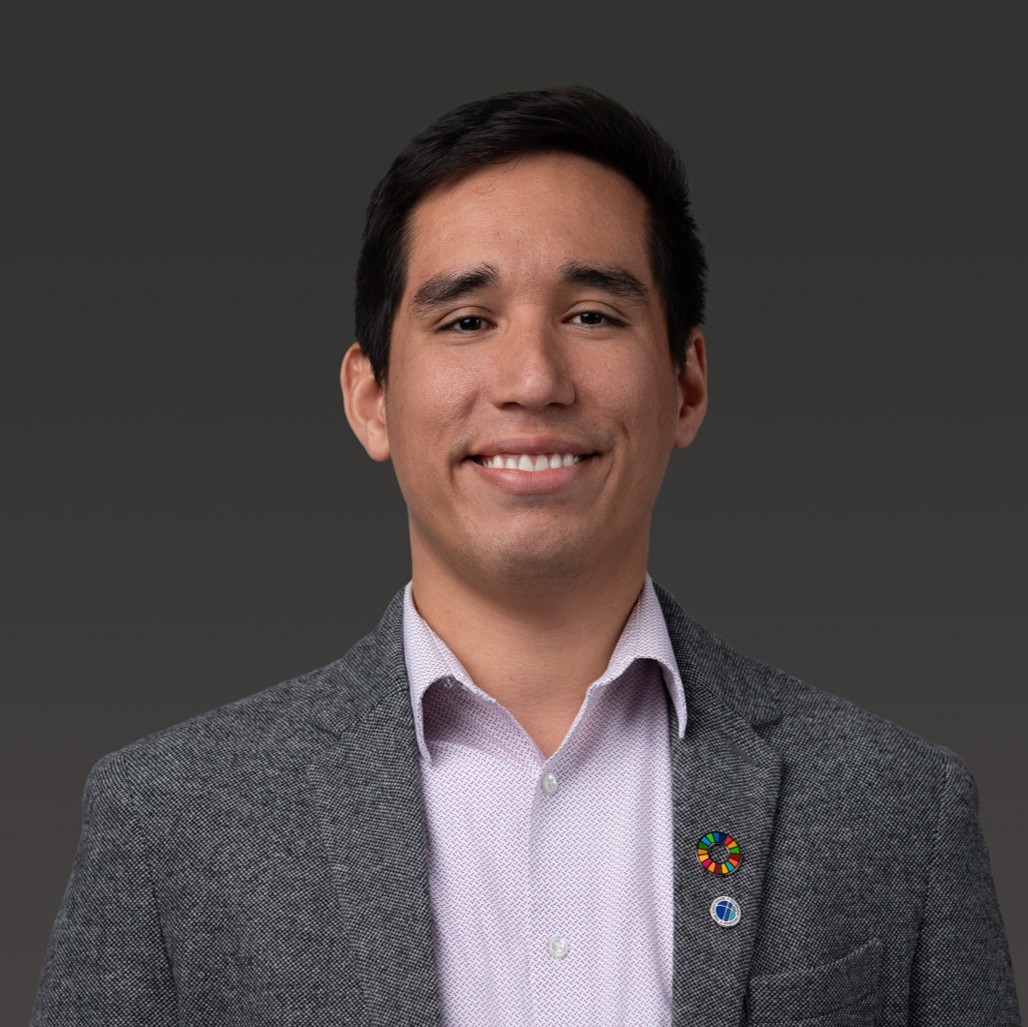
Guillermo Vizarreta-Luna
M.S. Systems Engineering | Spring 2025
Dynamic Emissions Modeling for Sustainable Algal Carbon Nanofiber Production
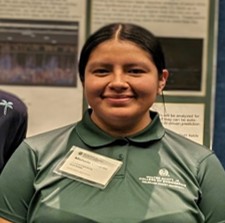
Michelle Vasquez
Scott Undergraduate Research Experience | Spring 2025
Measuring Documentation Burden Through eye-tracking in Emergency Departments