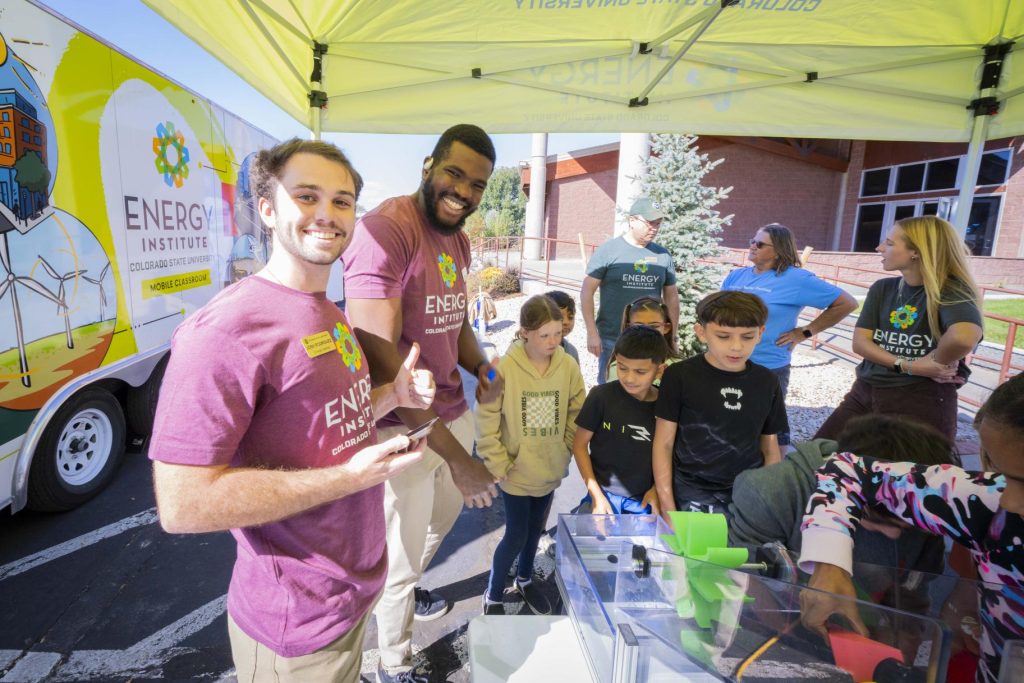
Transforming How Engineers, Scientists, and Policymakers Navigate Human-Environmental Systems
Many pressing infrastructure and environmental challenges, whether from from climate-driven drought and urban heat to energy transition and systemic resilience, are not simply engineering problems. They are human-environmental systems problems: complex, dynamic, and uncertain, with deep interdependencies across ecological, technological, and social domains. The Blue-Green Decisions Lab examines these challenges by advancing systems-based, interdisciplinary approaches to infrastructure resilience, sustainable community development, and human aware decision making.

Focusing on decision support at the water-energy nexus, the lab integrates methods from systems engineering, environmental science, data analytics, and behavioral research. It combines model-based and data-driven insights with participatory, stakeholder-engaged processes to support decisions that are not only technically optimal, but also contextually informed and socially attuned. Our work spans utility operations, community-scale planning, policy design, and adaptive governance, with a commitment to translating science into real-world impact.
Our approach combines:
- Systems modeling and resilience analytics to better understand coupled infrastructure and dynamics under uncertainty;
- AI-augmented and human-in-the-loop decision tools that enhance judgment and transparency in complex planning contexts;
- Empirical and conceptual work on the human dimensions of engineering, including human behavioral modeling, risk perception, institutional decision-making, and stakeholder engagement;
- Design and evaluation of nature-based solutions that align built infrastructure with ecological function and community priorities.
Navigating Interdependent Water-Energy Systems
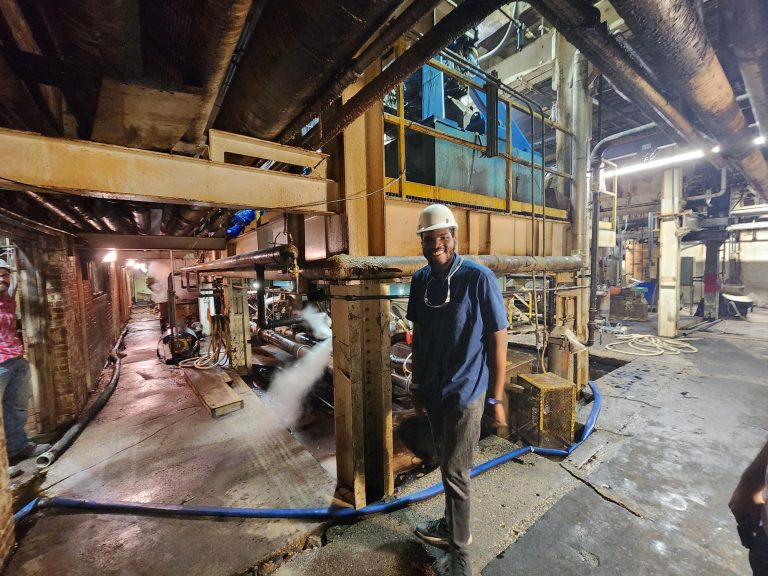
Water and energy systems are increasingly interconnected through their infrastructure, operations, and shared exposure to climate and social stressors. Changes in one system, such as electricity load variability or drought-driven supply restrictions, propagate through the other, often in nonlinear and unexpected ways. Yet these coupled dynamics remain underrepresented in infrastructure planning and decision support.
Early-stage modeling and decision analysis are essential to anticipate emergent vulnerabilities and identify leverage points for integrated water-energy planning. We are developing systems-based models and analytics to understand, simulate, and visualize these interdependencies. By integrating operational data, behavioral insights, and long-range planning scenarios, our work supports multi-utility coordination, adaptive infrastructure investment, and improved resilience assessment.
Human-Aware Design and Governance
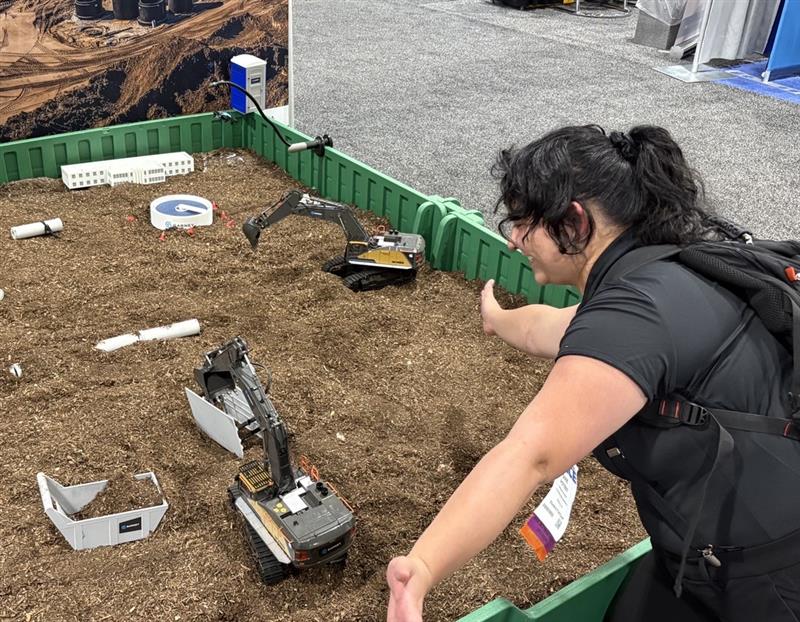
Conventional engineering models often treat human behavior as noise or constraint. But human built systems are socio-technical by nature: their performance, resilience, and legitimacy depend fundamentally on human decisions as users, institutions, and communities. As cities becomes more complex and digitally augmented, understanding and modelling human actions becomes more critical.
Our work develops and applies models of decision-making, choice, institutional behavior, and stakeholder engagement within engineering contexts. We study how cognitive, organizational, and political dynamics shape decisions under uncertainty, and how system design can better anticipate human actions. This includes work on choice models, agent-based modelling, embedded AI, decision visualization, and the localization of operational and policy decisions. The goal is to reframe design and governance as not only a technical system, but as a space of evolving human decision and interaction.
Nature-Based Solutions and Ecological Integration
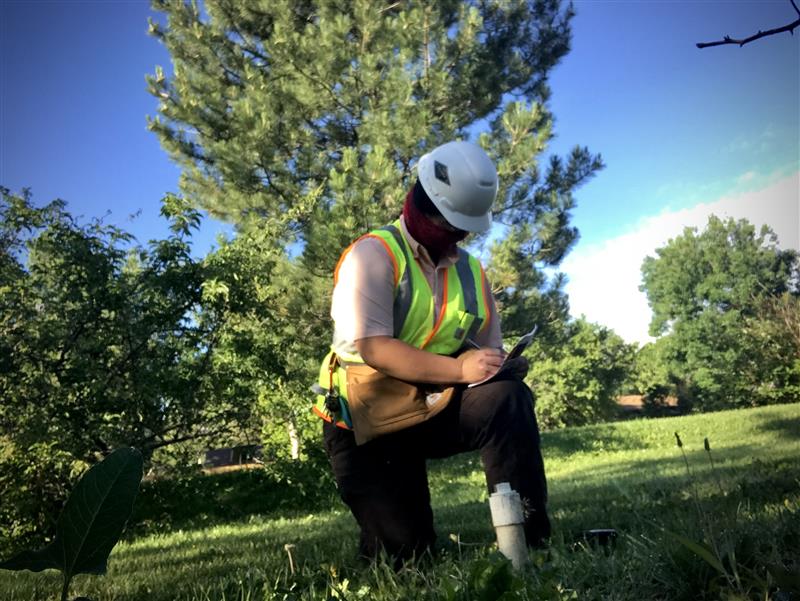
Nature-based solutions offer promising alternatives to conventional approaches, with potential benefits for biodiversity, community health, and long-term resilience. However, these solutions introduce new complexities into infrastructure planning, particularly around performance uncertainty, ecological feedbacks, and institutional coordination.
We investigate how nature-based infrastructure can be better modeled, evaluated, and governed as part of broader systems. We incorporate principles of ecological resilience and coupled socio-enviornmental knowledge into our research and approaches. This includes the development of methods to quantify ecological co-benefits, optimize performance under uncertainty, and incorporate stakeholder values in design and implementation. The challenge is not only technical; it is also epistemic and institutional, requiring new frameworks for aligning ecological knowledge with engineering decision processes.
Building a New Generation of Systems Thinkers
Meeting today’s infrastructure challenges requires new capabilities in engineering education and practice. As systems become more integrated, data-intensive, and participatory, engineers and scientists must be equipped to work across disciplinary boundaries, interpret complex feedbacks, and engage with the social dimensions of their work.
The Blue-Green Decisions Lab is committed to cultivating the next generation of systems thinkers through interdisciplinary research, mentorship, and experiential learning. Students and collaborators work on real-world infrastructure problems involving decision-support modeling, human behavior, stakeholder engagement, and resilience planning. Through this training, we aim to build capacity for a new kind of infrastructure professional: one who understands not just how systems function, but how they fail, adapt, and evolve — and how people shape them along the way.