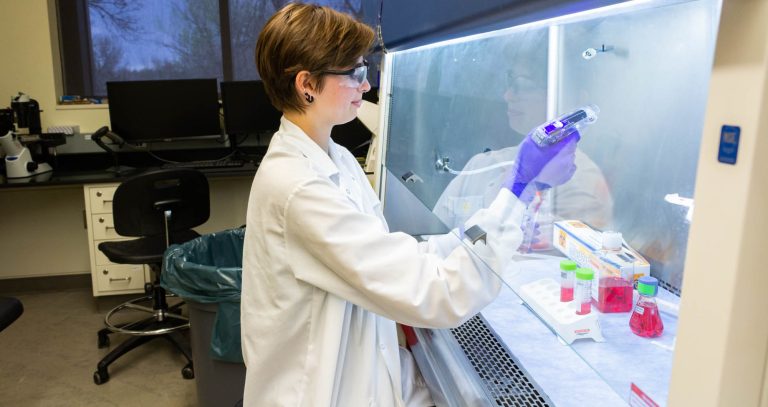
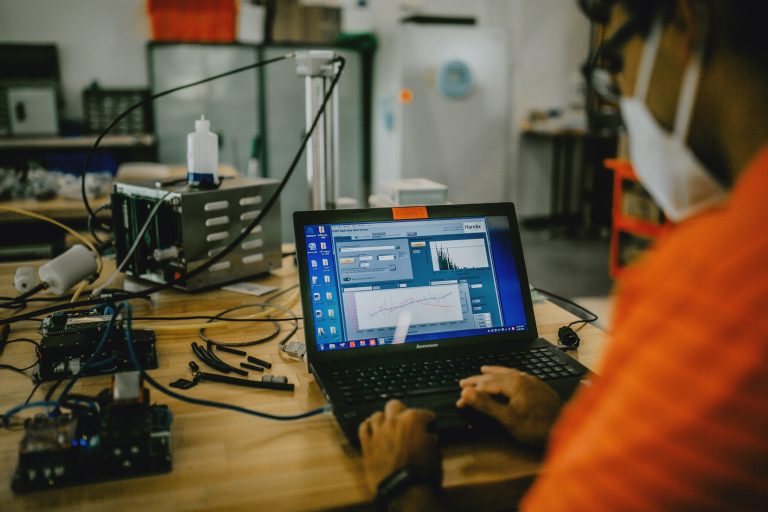
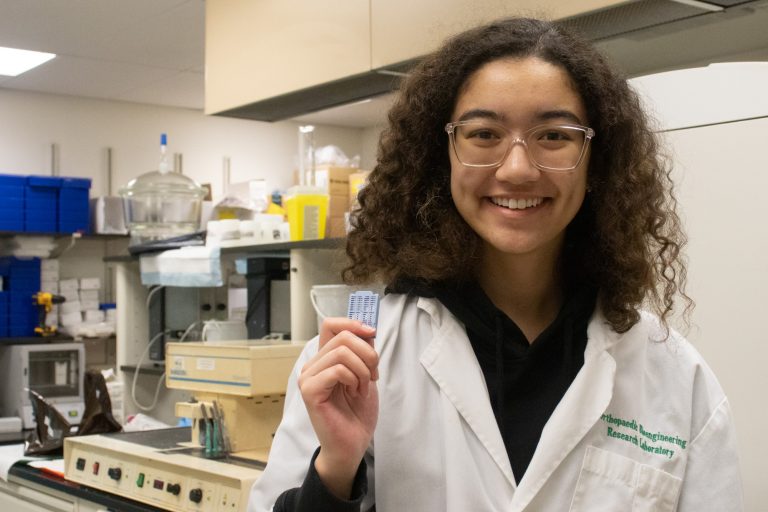
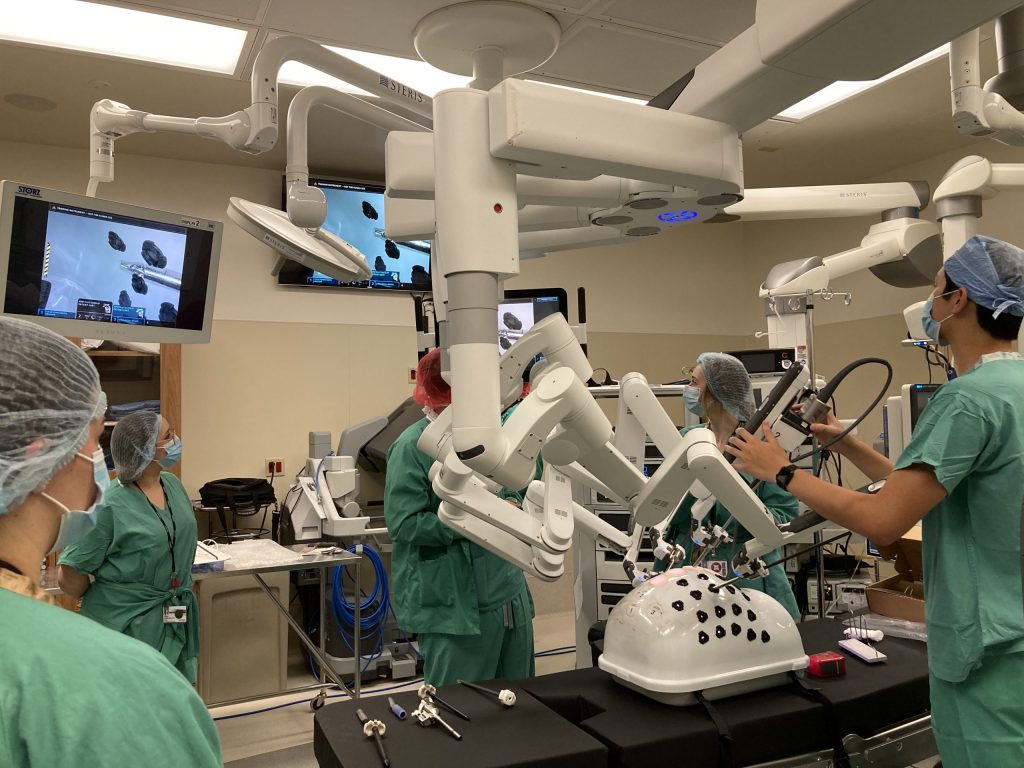
Through our multidisciplinary approach, students learn to create products and solutions to tackle problems in human and animal health.
Program Overview
Biomedical Engineering is a five-year dual-degree program that combines the breadth of biomedical engineering with the depth of a traditional engineering degree.
With a curriculum focused on healthcare applications of engineering, graduates of the biomedical engineering program receive two degrees: one B.S. in biomedical engineering (BME) and the other B.S. in one of the four traditional engineering areas.
With emphasis on process engineering, computer modeling and quantitative biology, the BME+CBE program provides solid chemical/biological/biomedical engineering skills to work with technologies that use biology and chemistry to identify and improve health.
BME+CpE students learn to develop/design/enhance technologies that harness electrical signals into technologies that support health –design medical instruments that image and/diagnose/treat illnesses; detect threats to food safety and security; utilize biosensors to diagnose cancer cells.
BME+EE and BME+EE/L&O students learn to develop/design/enhance technologies that harness electrical signals into technologies that support health –design medical instruments that image and/diagnose/treat illnesses; detect threats to food safety and security; utilize biosensors to diagnose cancer cells.
Our BME+MECH graduates are prepared to help design medical devices and equipment that support movement in the body – e.g. prosthetics, exercise equipment for astronauts, bone scaffolding, exoskeletons or next-gen diagnostic and therapeutic surgical tools – as well as work with biomaterials or other elements that support improved health.
Linking a Biomedical Engineering Focus to Your Primary Major
The School of Biomedical Engineering offers undergraduate students the opportunity to earn credits in a minor program to complement their primary major. This 21-credit minimum minor is open to all majors. The program provides a solid foundation in biomedical engineering and strengthens skills in engineering and life sciences.
Not an engineering major? No problem! Look at the curriculum below to get started and talk to your advisor for any questions.
21 Credit Minor including Core Biomedical Engineering Courses*:
BIOM 200 – Fundamentals of Biomedical Engineering
BIOM 300 – Problem-Based Learning in Biomedical Engineering
Do you have a question that’s not featured on our website? Undergraduate Advisors Chase Jackson and Claire Lavelle are happy to help! Email your questions to either advisor below.