Driving Simulator
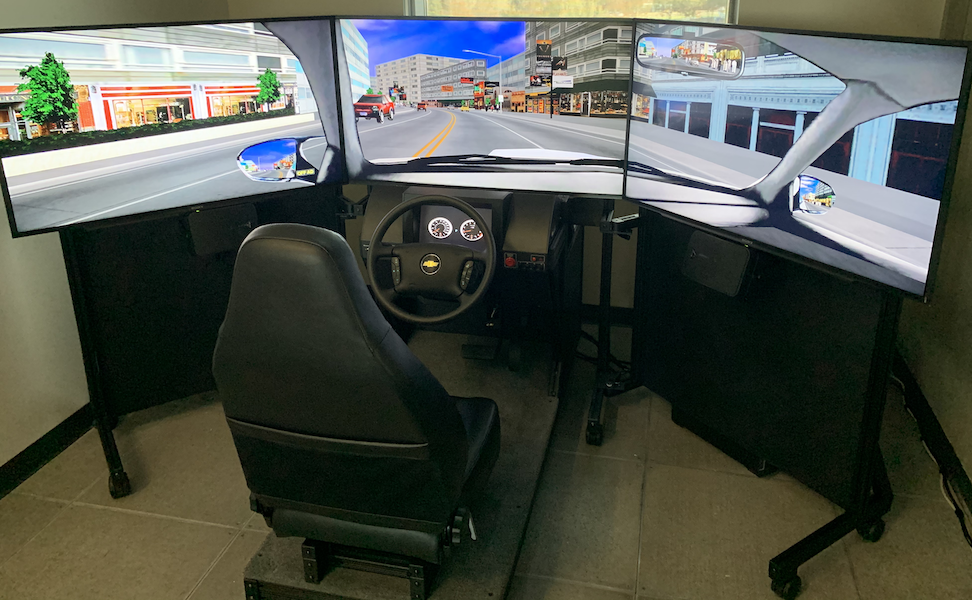
The driving simulator lab is located at the CSU Powerhouse Energy Campus. The simulator is a National Advanced Driving Simulator (NADS) MiniSim, with 140 degree horizontal field of view. It has customizable scenarios and customizable interface displays capable of responding to user input. The simulator can simulate manual, semi- and fully-autonomous driving. We use this lab to perform human factors evaluations of driver behavior, in a safe and controlled environment.
Test Track
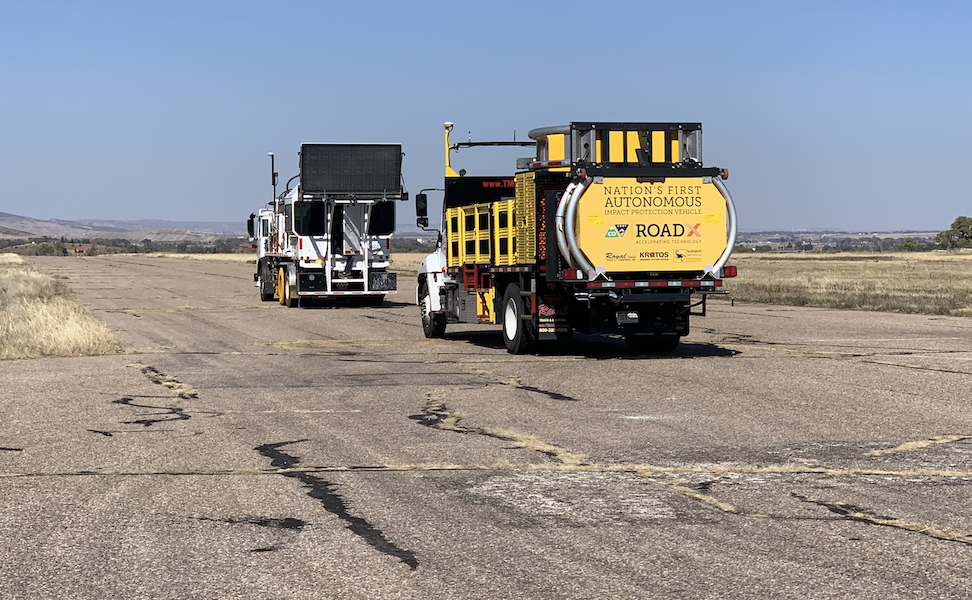
Field testing on a closed track is conducted at Christman Airfield, which is located at the CSU Foothills Campus. The facility, which is a decommissioned airport, has a 4000 ft by 60 ft runway and controlled airspace, all of which can be used for controlled testing. We use this facility to provide real-world context for validating and evaluating advanced vehicle systems and human-machine interactions.
Quadruped Robot
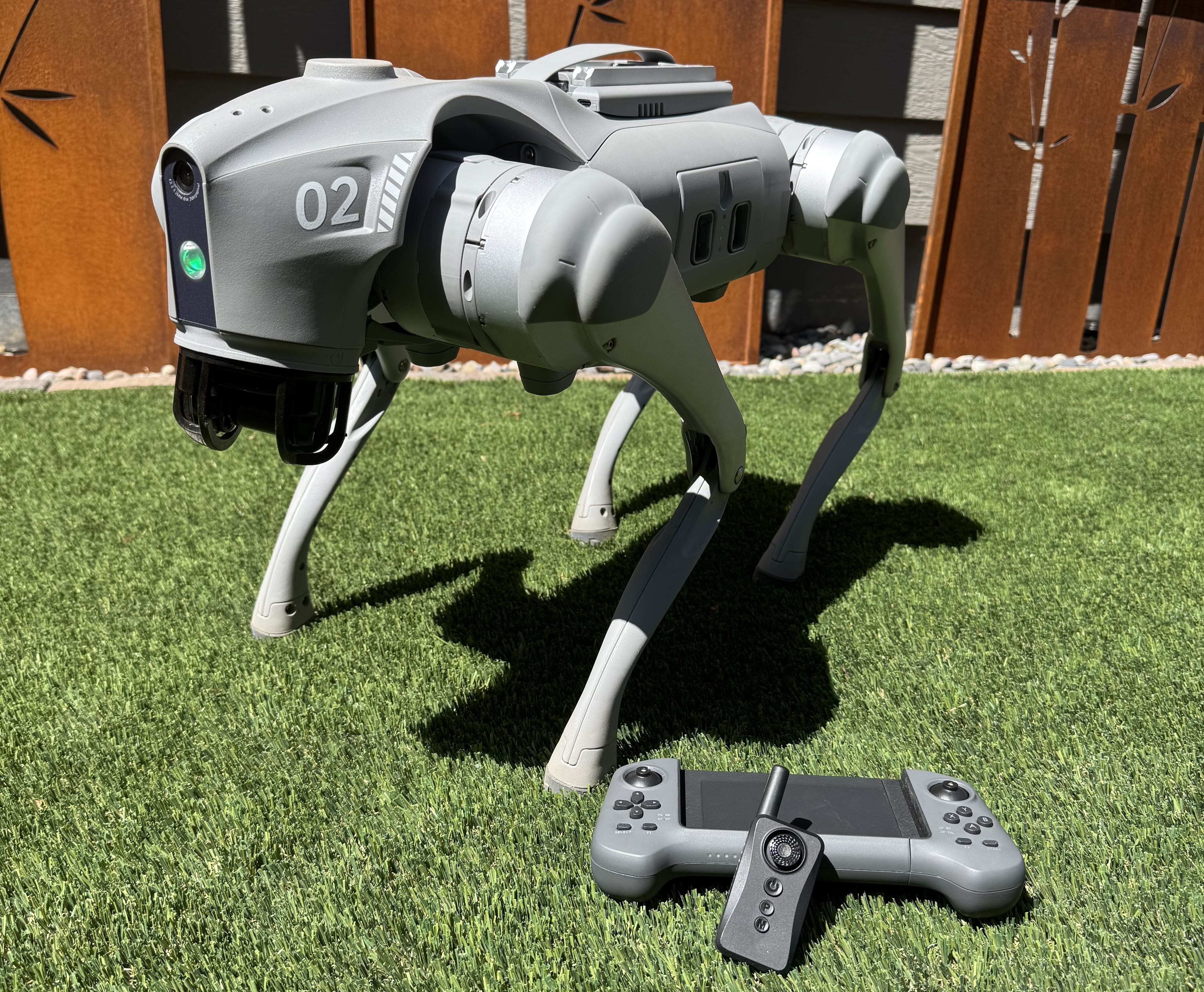
A Unitree Go2 robotic quadruped platform is used to support research in human–AI teaming, autonomous inspection, and human–machine interaction. The robot is equipped with an upgraded LiDAR sensor for 3D environment perception and a Unitree Go2 Servo Robotic Arm (D1), enabling mobile manipulation and interaction with objects. The platform includes an SDK that allows for development in Python, C++, and ROS2, providing flexibility for custom control and autonomy. We use this system to develop and deploy our own computer vision and deep learning algorithms, enabling tailored perception and decision-making capabilities. This platform supports research in real-world robotic autonomy, collaborative human-robot systems, and deployable intelligent systems.
Virtual Reality
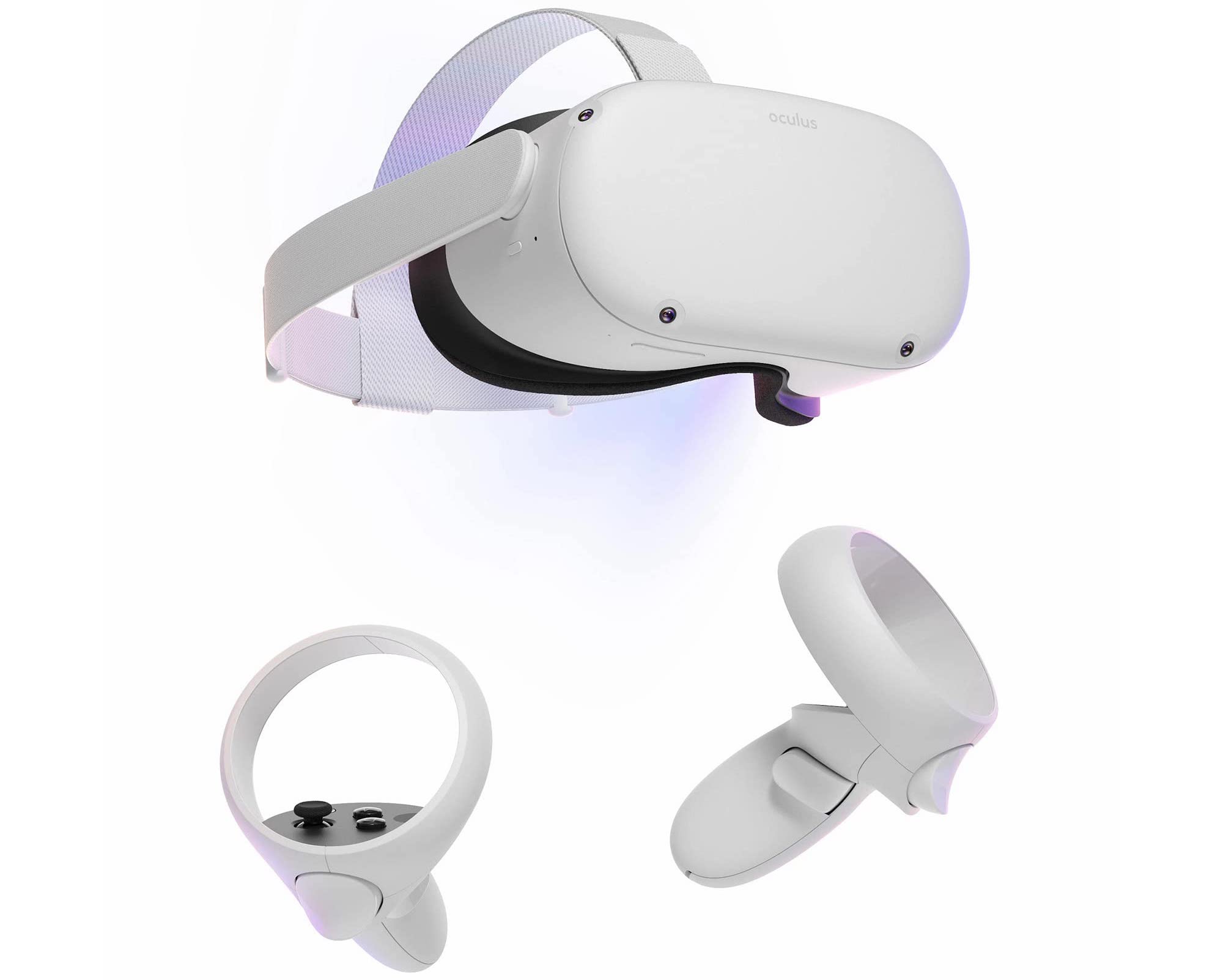
A Meta Quest 2 headset is used for virtual reality research applications, allowing us to conduct immersive and interactive experiments. This headset is used for virtual simulations, cognitive and behavioral research, training and education, and data visualization exploration. Our team has experience developing in Unity, which allows us to create fully customizable and from scratch simulations.
Physiological Instruments
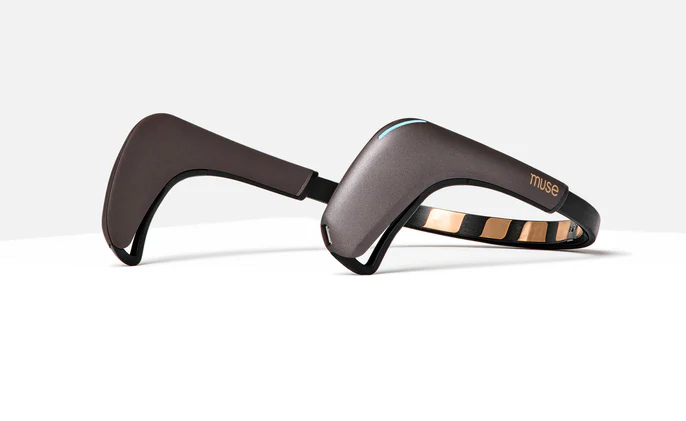
We have a variety of instuments we use to measure and quantify human cognitive load, workload, and state, which are derived from physiological data recording. The lab is equipped with an Ergoneers Dikablis Glasses 3 eye tracker, Polar H10 chest strap, Polar Verity Sense arm band, Empatica E4 wearable, and Muse 2 headband. With these devices, we can measure eye glance behavior, heart rate variability (EKG, PPG), brain activity (EEG), and skin conductance (EDA). The lab also has a variety of high fidelity cameras used for vision deep learning classifications of human behavior and state.
On-Road Vehicle Data Logging

A fleet of CANedge3 data loggers by CSS Electronics are used to support on-road data collection from a wide range of vehicle types. These devices enable continuous vehicle data collection via CAN bus using the OBD2 (light-duty vehicles) and J1939 (heavy-duty vehicles) protocols. Data includes, but not limited to, vehicle position, speed, idle time, altitude, distance, angular rates, acceleration, fuel consumption, fuel economy, and time. Equipped with LTE and GNSS/GPS antennas, the CANedge3 allows for wireless data transmission and precise vehicle tracking. These systems are integral to projects focused on real-world vehicle performance, driver behavior, and transportation system resilience.
Air Quality Sensors

Our lab is equipped with several Sensirion SEN5x environmental sensors for high-resolution air quality data collection in field and laboratory settings. This compact, state-of-the-art device enables real-time monitoring of particulate matter (PM1.0, PM2.5, PM4.0, and PM10), volatile organic compounds (VOCs), nitrogen oxides (NOx), and ambient environmental conditions (humidity and temperature). Our team has integrated each SEN5x unit with an Arduino microcontroller to support onboard data storage and precise timestamping, enabling advanced research in environmental sensing and human health impacts.
Flexible Lab Space & Equipment
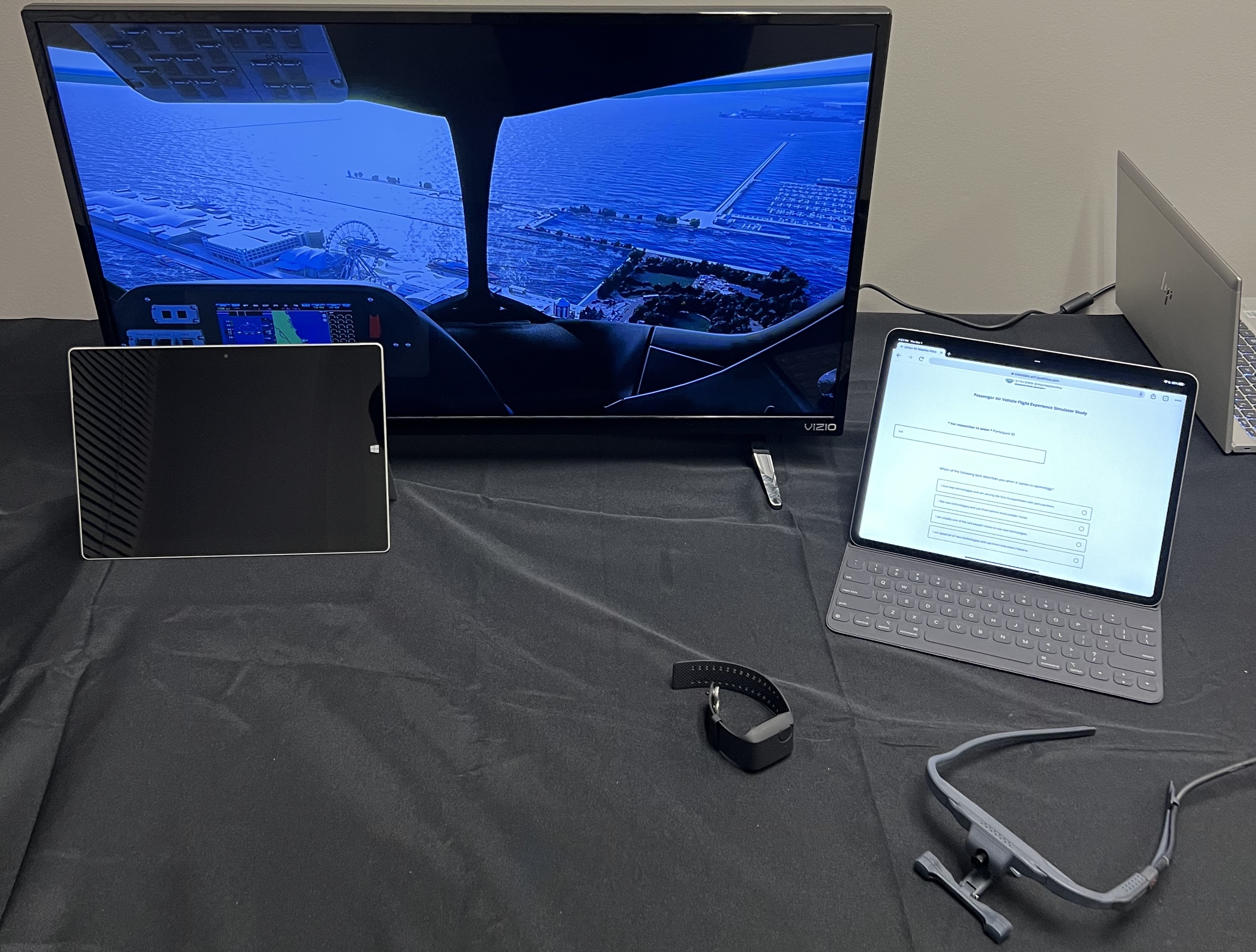
The majority of the lab equipment and space are mobile and flexible, allowing for a variety of human factors experimental designs. This includes several high-powered computers, large monitor displays, tablets, portable desks, open spaces, and physiological monitoring devices. The lab team is skilled in application development in a variety of programming languages, allowing for custom interface designs, data collection, data reduction, and data analysis.